Stories · Iran
The Carpet Dealer of Tabriz
A merchant who refused to sell a carpet he thought was wrong for its buyer. A composite story from the bazaars of Iran, told as a lesson in how trade works there.
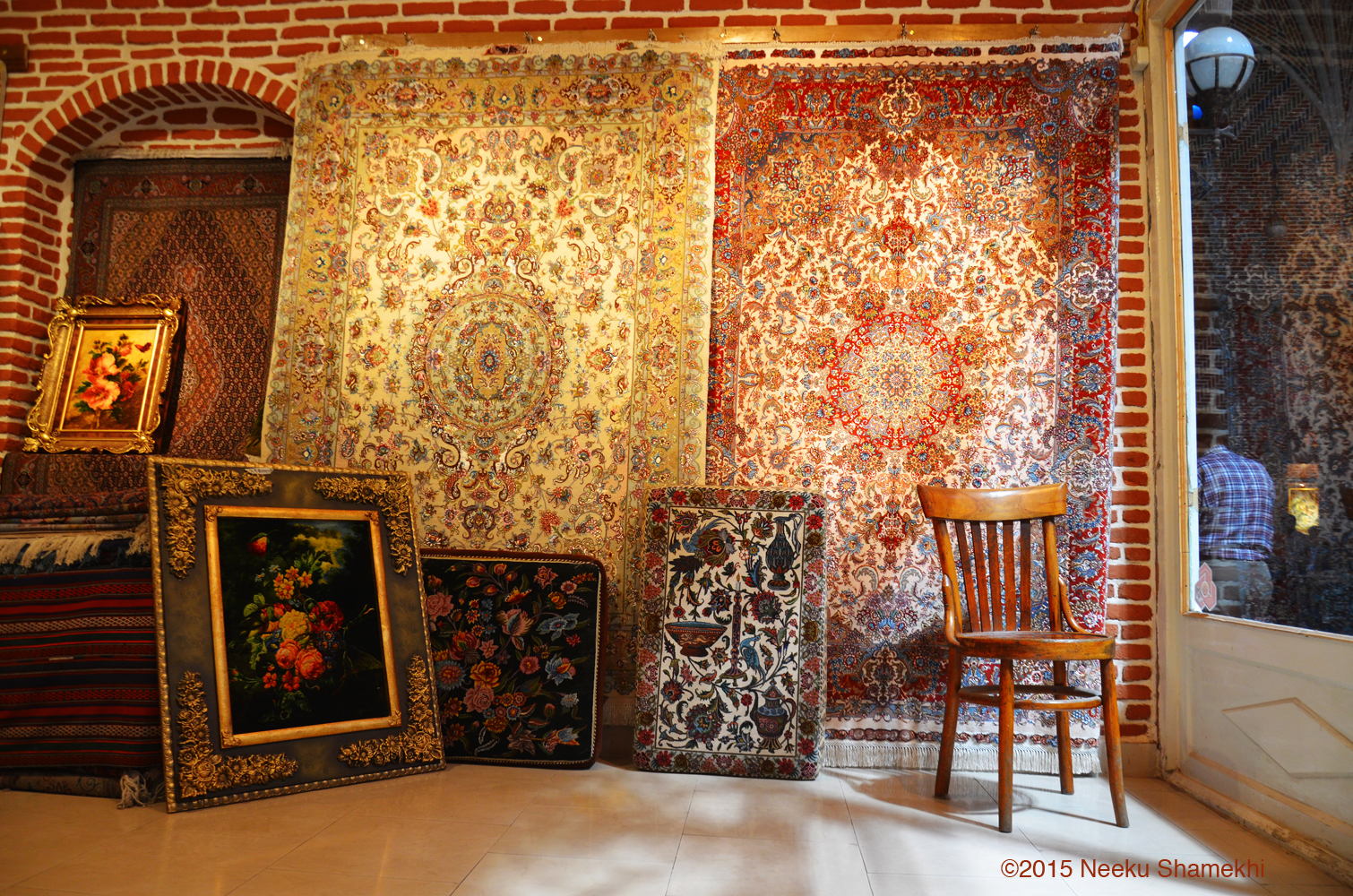
Editor’s note: this is a composite story, assembled from recurring experiences reported by travellers in Iranian bazaars rather than a single documented event. It is labelled as an example story for the same reason all our Stories are: this site does not publish invented first-person travelogues as fact.
The shop was three metres wide and went back forever — the carpet shops of the Tabriz bazaar (UNESCO, 2010) are built like that, long thin slots of light with rolls of carpet stacked to the ceiling on both sides, and at the end, a samovar.
I had done the tourist thing: walked in, pointed at a Heriz on the top stack, and asked the price. The dealer — third generation, by the photographs over the tea tray — looked at me for a moment and said, “First, tea.”
The tea comes first
For the next half hour we did not discuss a single carpet. He asked where I had come from, how long in Iran, whether I had seen the blue mosque across the street, what I thought of the weather. The tea was refilled twice. This is not stalling; it is the transaction. In the bazaar economy, a carpet is sold inside a relationship, and the relationship has a minimum length — roughly, two glasses of tea.
Then he stood up, pulled down the Heriz I had pointed at, unrolled it on the shop floor, looked at it, and said: “No. Not this one.”
Not for you, he meant. Too heavy for your room, too dark for your light, and you would get it home and in a year you would remember the shop where you overpaid. He rolled it back up and pulled out something half the size, in soft blues, and said: “This one is a problem — it is too beautiful. You will have to fight me for it.”
The refusal as a technique — and as a code
I have since learned that the strategic refusal is a documented feature of carpet commerce: a dealer who thinks a piece is wrong for the buyer, or who cannot stand behind its provenance, will sometimes decline to sell it at all, rather than make the sale and lose the customer’s trust — in a trade where customers come back for decades and bring their relatives, one wrong sale is expensive.
Whether that particular refusal was honesty or theatre, I genuinely cannot tell you. That is the honest thing to say about bazaar commerce: the performance and the sincerity use the same words, and a traveller with two weeks of Farsi cannot audit the difference. What I can report is the outcome.
The week-long hold
The carpet I finally bought — a small Tabriz weave, the knot count invisible and irrelevant to anyone but another dealer — cost about a third of what the Heriz would have. He wrote no receipt. Instead he wrote the shop’s name and his father’s name on the back of a card, and said: “You come back in five years and tell me how it wears. Then we will know if I am a good man.”
The carpet shipped two weeks later, as promised, from an office around the corner that looked like a 1960s travel agency and functioned with terrifying efficiency.
What the story is actually about
People imagine bazaar bargaining as combat — the haggling scene from every travel film. The reality I keep hearing from travellers is closer to matchmaking: the merchant is not trying to win the negotiation, he is trying to place the object correctly so that the relationship produces its next sale, and the one after that. The tea is the contract’s signature page.
You are allowed to be sceptical of all this, including this story. But if you go, do one thing: when the tea comes, sit down and drink it. Everything else in the shop happens after that.
Frequently asked questions
Is this a real story?
It is a composite, assembled from recurring experiences reported by travellers in Iranian bazaars, and it is labelled as such. No single individual is portrayed. The customs it describes — tea before talk, the refusal as a sales technique, the meaning of the week-long hold — are documented features of carpet commerce in Tabriz.
Do bazaar merchants really refuse sales?
Yes, in a specific way: a dealer who thinks a piece will be resold wrongly, or who cannot stand behind its provenance, may decline the sale outright — sometimes offering a cheaper piece instead. Losing one sale to protect a reputation in a trade built on repeat customers is rational, not romantic.
How long can a merchant 'hold' a carpet for you?
Commonly a few days to a week, without deposit, in the smaller family shops. The hold is a gesture of trust — and, frankly, a claim on your return. If you cannot come back, sending a message is considered essential courtesy.