Routes · Jordan
Two Weeks in Jordan: The Route That Actually Works
Amman, Petra, Wadi Rum and Aqaba in fourteen days, built from real driving times and the country's eight World Heritage sites. Including the two days most itineraries waste, and the one they always skip.
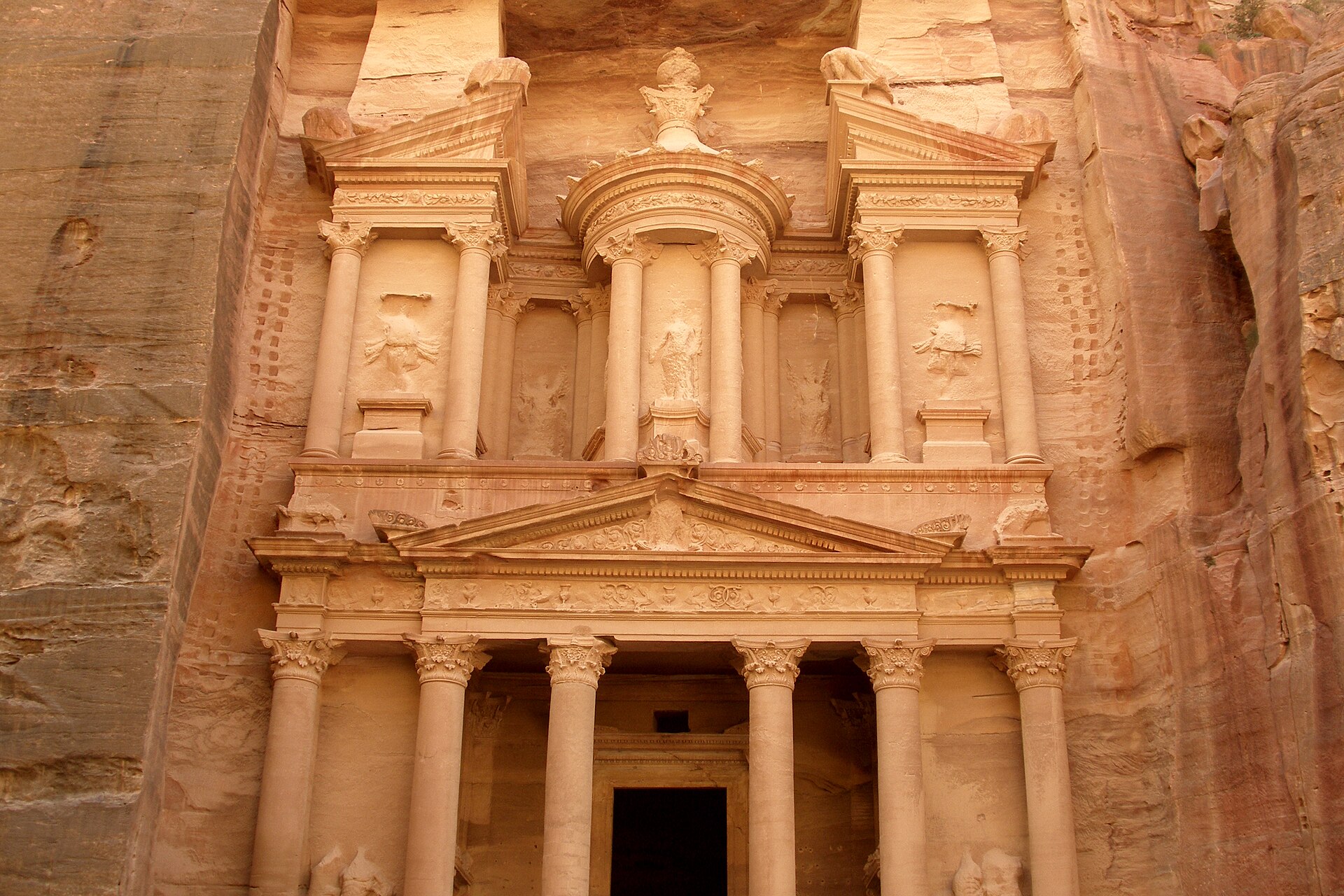
Jordan is a small country with an unusually complete set of attractions and an itinerary problem: almost everyone does the same four stops in the same order, spends too long in one and skips another entirely. This is a fourteen-day route built around actual driving times, the country’s eight World Heritage sites, and the fact that you will be tired by day nine.
Why fourteen days, and not seven
Seven days in Jordan is a coach tour: Amman, Petra, Wadi Rum, out. It works, and you will see the headline sights. What you lose is everything that makes the country more than its two famous sites — the Roman cities, the early Islamic desert castles, the salt-town architecture of As-Salt, and any sense of pace.
Fourteen days lets you do the classic route properly and add the second layer. It also gives you weather flexibility, which matters more than most guides admit.
The route at a glance
| Days | Base | What you’re doing |
|---|---|---|
| 1–3 | Amman | Arrive, the citadel and Roman theatre, the old downtown, the food |
| 3 | Day trip: Jerash | One of the best-preserved Roman provincial cities anywhere |
| 4 | As-Salt | A World Heritage town 30 minutes away, and almost nobody goes |
| 5–6 | Dead Sea / Madaba / Mount Nebo | Lowest point on earth, plus mosaics and the view into the Jordan Valley |
| 7–8 | Petra | Two full days, not one |
| 9–10 | Wadi Rum | Desert, properly — a night in the protected area |
| 11–12 | Aqaba | Red Sea, reef, rest |
| 13 | Back north: Um er-Rasas / Quseir Amra | The desert castles on the return leg |
| 14 | Amman | Departure |
Real driving times between the key legs, all approximate and traffic-dependent:
- Amman → Jerash: under an hour (about 50 km)
- Amman → As-Salt: about 30 minutes
- Amman → Dead Sea: about an hour (roughly 60 km, with a descent of over 1,000 m)
- Amman → Madaba: about 40 minutes; Madaba → Mount Nebo: 20 minutes
- Amman → Petra: about 3.5 hours (roughly 235 km, via the Desert Highway)
- Petra → Wadi Rum: about 2 hours
- Wadi Rum → Aqaba: about 1 hour
- Aqaba → Amman: about 4 hours (roughly 330 km)
Those numbers are why the route is shaped the way it is: Petra, Wadi Rum and Aqaba form a single southward chain, and doubling back to Amman between them is where itineraries lose a full day.
Amman, properly used
Amman gets treated as an airport with hotels. Give it three days and it is one of the more rewarding cities in the region.
- The Citadel and the Roman Theatre — the layered city in one morning: Bronze Age through Roman, Byzantine, Umayyad.
- Downtown (al-Balad) — the old commercial heart, the gold souq, the fruit stalls, the stairs. Walk it in the late afternoon; this is the part of Amman most photographs manage to miss entirely.
- The food — this is the real reason to stay. Mansaf (lamb cooked in fermented dried yoghurt, served over rice and eaten by hand from a shared platter), knafeh from a specialist shop, and the bakeries.
- Rainbow Street and Jabal Amman — cafés, galleries, and the comfortable middle of a city that is otherwise constantly working.
Add the Jerash day trip. It is one of the largest and best-preserved Roman provincial cities in the world — colonnaded streets, two theatres, a hippodrome — and it is under an hour from the capital. Go early.
The day most itineraries skip: As-Salt
As-Salt was inscribed in 2021 as The Place of Tolerance and Urban Hospitality, and it is half an hour from Amman. It is an Ottoman-era town built in yellow limestone, on a hillside, with a dense historic core and almost no coach traffic.
The reason it works as World Heritage is unusual: it was listed not for temples or ruins but for a social pattern — a town that developed a distinctive tradition of hospitality and coexistence, expressed in its architecture and its institutions. Walk the streets, look at the houses, drink tea with someone.
Two hours here, on the way to somewhere else, is one of the highest-return stops in the country.
The Dead Sea and the mosaic belt
- The Dead Sea — the lowest point on land. Swim (float) once; the novelty is real but so is the salt in every cut you own. Most visitors stay one night at a resort hotel and that is the right call.
- Madaba — the mosaic map of the Holy Land in St George’s Church is the headline, and the town is full of mosaic workshops doing genuinely good work.
- Mount Nebo — the traditional viewpoint over the Jordan Valley toward Jericho. On a clear day the visibility is startling.
Petra: two days, not one
The standard advice is one long day. That is a mistake, and here is the arithmetic.
- Day one — the Siq, the Treasury, the street of façades, the theatre, and then the Monastery: around 800 steps up, at the far end, and the single most impressive thing on the site. This alone is a full day of walking.
- Day two — the back route into Petra via Little Petra (requiring transport at the start), the royal tombs, the High Place of Sacrifice, and the museum. Far fewer people, completely different site.
Practical notes: start at opening time, both days. Take water and expect to buy more. Wear shoes with actual grip — the rock is polished by two thousand years of feet. The site is inscribed as Petra, 1985, reference 326.
Wadi Rum: the one place to spend real money
Wadi Rum was inscribed in 2011 as a mixed property — both cultural and natural — which is rare and tells you something about what is there: a sandstone landscape of canyons and rock bridges, and thousands of years of human marks on it, from petroglyphs to Nabataean temples.
Two things matter for how you do it:
- Stay inside the protected area overnight. A jeep tour from the highway is not Wadi Rum; the night sky is the point.
- Choose a camp by what it is, not what it looks like. Bedouin-run camps vary enormously in seriousness. Ask who runs it and whether they live in the area.
A jeep tour, one night, and a sunrise walk before departure is the right shape for most travellers. Add a second night if you want to do any proper walking.
Aqaba: the rest day you’ll need
By day eleven you will be tired, and Aqaba is where the itinerary should stop trying. It is on the Red Sea, the water is warm, the reef is accessible directly from the shore in several places, and the town is relaxed in a way nowhere else in the country is.
It is also the site of Aqaba Marine Reserve, inscribed in 2026 — a very new addition to Jordan’s list, and a reminder that the country’s heritage registration is still growing.
The return leg: the desert castles
Most people drive Aqaba → Amman in one shot and see nothing. Break it:
- Quseir Amra (inscribed 1985) — an Umayyad hunting lodge with frescoes covering the interior, including a star ceiling and a bath complex. It is small and unexpected, and one of the earliest Islamic monuments on the list.
- Um er-Rasas (inscribed 2004) — a Roman, Byzantine and early Islamic settlement with spectacular mosaic floors, most of it still unexcavated.
- Umm Al-Jimāl (inscribed 2024) — the newest cultural inscription, a basalt town in the north-east with a very different architectural language from the rest of the country.
What this costs you, in effort
The route works because it follows the geography instead of fighting it:
- North (Jerash, As-Salt) as day trips from Amman
- West (Dead Sea, Madaba, Nebo) as a single loop
- South (Petra, Wadi Rum, Aqaba) as a one-way chain, then north again through the desert castles
That is fourteen days with three long drives and no wasted backtracking, and it takes in most of Jordan’s eight World Heritage properties without ever feeling like a checklist.
The verdict
Jordan rewards being taken slowly and punished for being rushed. Petra at dawn on day two, a night in Wadi Rum, and an afternoon in a limestone town nobody talks about will stay with you longer than anything you did in a hurry.
Frequently asked questions
Do I need a car in Jordan?
For this route, effectively yes, or you hire a driver. Public transport exists between the main towns but is slow, and Wadi Rum and the Dead Sea are awkward without private transport. Hiring a car with a driver for the long legs is the usual compromise.
Is the Jordan Pass worth it?
For most visitors on this itinerary, yes. It bundles the visa fee with entry to Petra and a list of other sites. Petra alone is priced high enough that the pass usually pays for itself, but check current prices — they change, and the maths depends on how many days you spend in Petra.
How many days does Petra need?
Two, honestly — one for the main trail to the Monastery and one for the back routes and the museum. One day is what most people do and it is a compromise, not a recommendation.