Routes · Saudi Arabia
Saudi Arabia's Northwest: Hegra, AlUla and the Old Pilgrim Road
Saudi Arabia opened to tourists in 2019, and its first World Heritage site — the 2,000-year-old Nabataean tombs of Hegra — is the anchor of a northwest route that also takes in oasis towns and a desert railway.
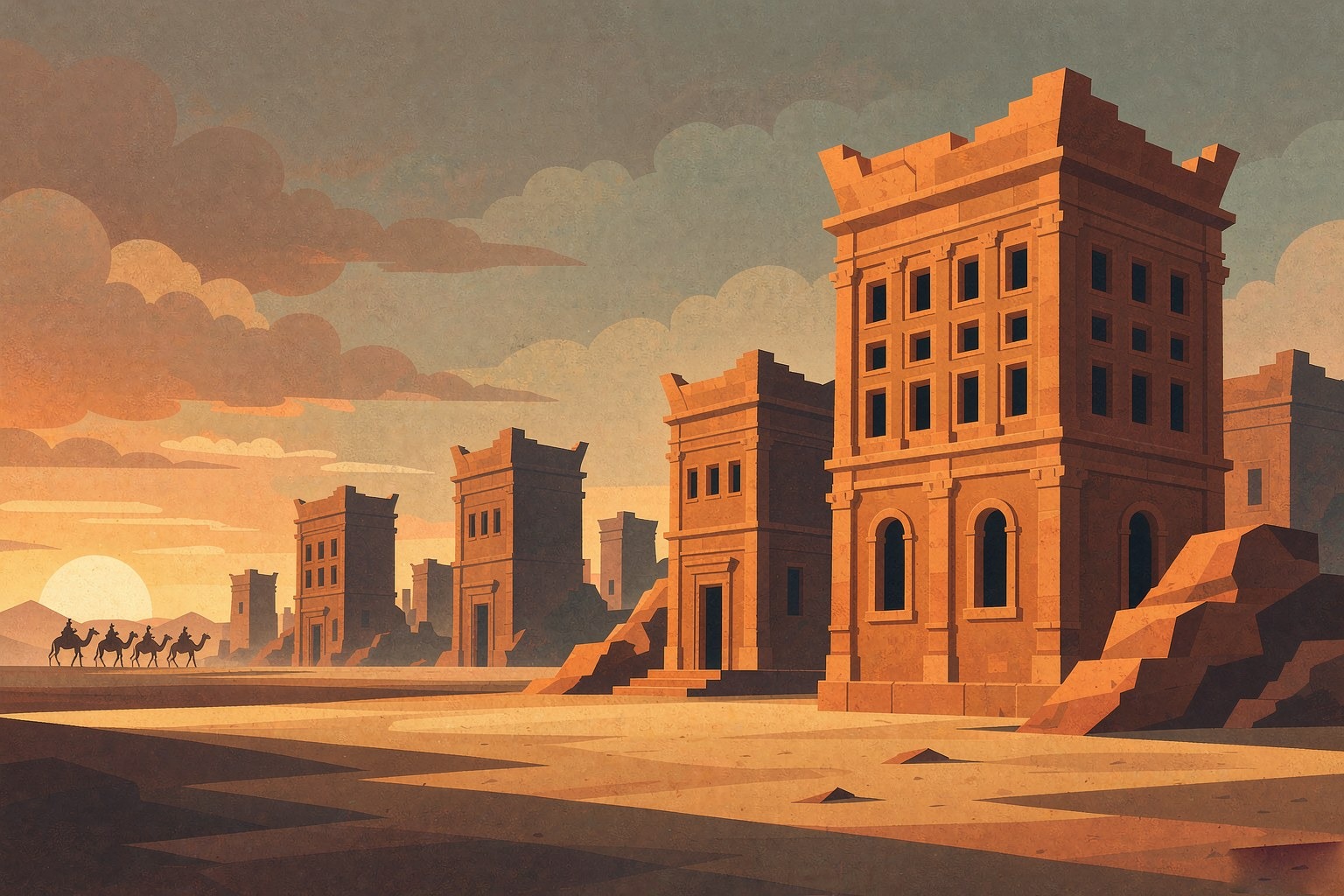
For most of modern history, the easiest country in the Middle East to not visit was Saudi Arabia. Tourist visas arrived only in 2019 — and the first thing the world discovered was that the kingdom had been keeping one of the region’s great sites to itself.
Hegra (site 1293, inscribed 2008) is Saudi Arabia’s first UNESCO World Heritage site: the southern capital of the Nabataeans, the same trading civilisation that carved Petra. And this route puts it where it belongs — at the centre of a northwest desert journey, not a checkbox.
The route in outline
Day 1–3 · AlUla and Hegra. Fly into AlUla or drive from Medina. Hegra’s 111 rock-cut tombs are scattered across open desert — unlike Petra’s gorge, here you drive between monument groups, and many facades survive nearly complete, including the famous tomb of Lihyan son of Kuza with its massive unfinished crow-step top. Book the official guided tour; the site’s interpretation is genuinely good.
Add Dadan, capital of the earlier Dadanite and Lihyanite kingdoms, and Jabal Ikmah, an open-air cliff library of inscriptions that earned its nickname as the region’s archive. AlUla’s old mud-brick town, only recently abandoned, is worth a slow evening.
Day 4 · The Hejaz Railway. The line that carried pilgrims from Damascus toward Medina stops at stations near AlUla, complete with rolling stock from the Arab Revolt era. It is industrial archaeology in the middle of nowhere — one of the most atmospheric half-days in the country.
Day 5–6 · Medina and on. Non-Muslim travellers may not enter the central sanctuary areas, but the city, its museums and its markets are accessible, and the road south or west to the Red Sea gives the drive a spine. Extend to seven days for the coast.
Reading the landscape
What makes this route special is legibility. The Nabataeans were caravan traders, and Hegra sits on the trade and pilgrimage corridors where incense, spice and later pilgrims moved north. At Hegra you are looking at a waystation of that economy; at the railway stations, the mechanised version of the same corridor, two thousand years later. Few regions anywhere let you see pre-Islamic trade and the steam age in the same afternoon.
Practical notes
- Season: October to March. The desert is otherwise punishing; winter evenings are genuinely cold in AlUla.
- Alcohol and dress: standard Saudi rules apply — no alcohol, modest dress; women driving and travelling alone are normal now.
- Photography: photograph landscapes freely; ask before photographing people.
- Advisories: check your government’s advice for border regions; some zones require special permission. The UK advisory is a good neutral baseline.
A decade ago this itinerary did not exist for outsiders. It is now the most interesting new route in the Arabian Peninsula — and it still feels like one.
Frequently asked questions
Do tourists need a visa for Saudi Arabia?
Most nationalities can apply for the eVisa online, valid for tourism, introduced in 2019. Check your own government's advisory for regional restrictions — certain border zones remain off-limits — and note local laws on dress, alcohol and photography of people differ from Western norms.
How is Hegra different from Petra?
Same Nabataean civilisation, different setting. Hegra's 111 rock-cut tombs stand isolated in open desert rather than a gorge, many with the original facades intact because the sandstone weathers slower here. You can drive between tomb groups in minutes rather than climbing for hours.
How many days do I need?
Three to four for the AlUla area itself (Hegra, the old town, Dadan and Jabal Ikmah, plus one desert experience), or six to seven including Medina and a stop along the Red Sea coast. The Hejaz Railway stations between AlUla and Medina are worthwhile if you like industrial history.