Routes · Türkiye
Eastern Turkey Overland: Ani, Mardin and the Road Nobody Rushes
East of Ankara the map changes: ruined Silk Road capitals, a city of honey-coloured stone on the Syrian border, and the world's most argueable cathedral. A practical route.
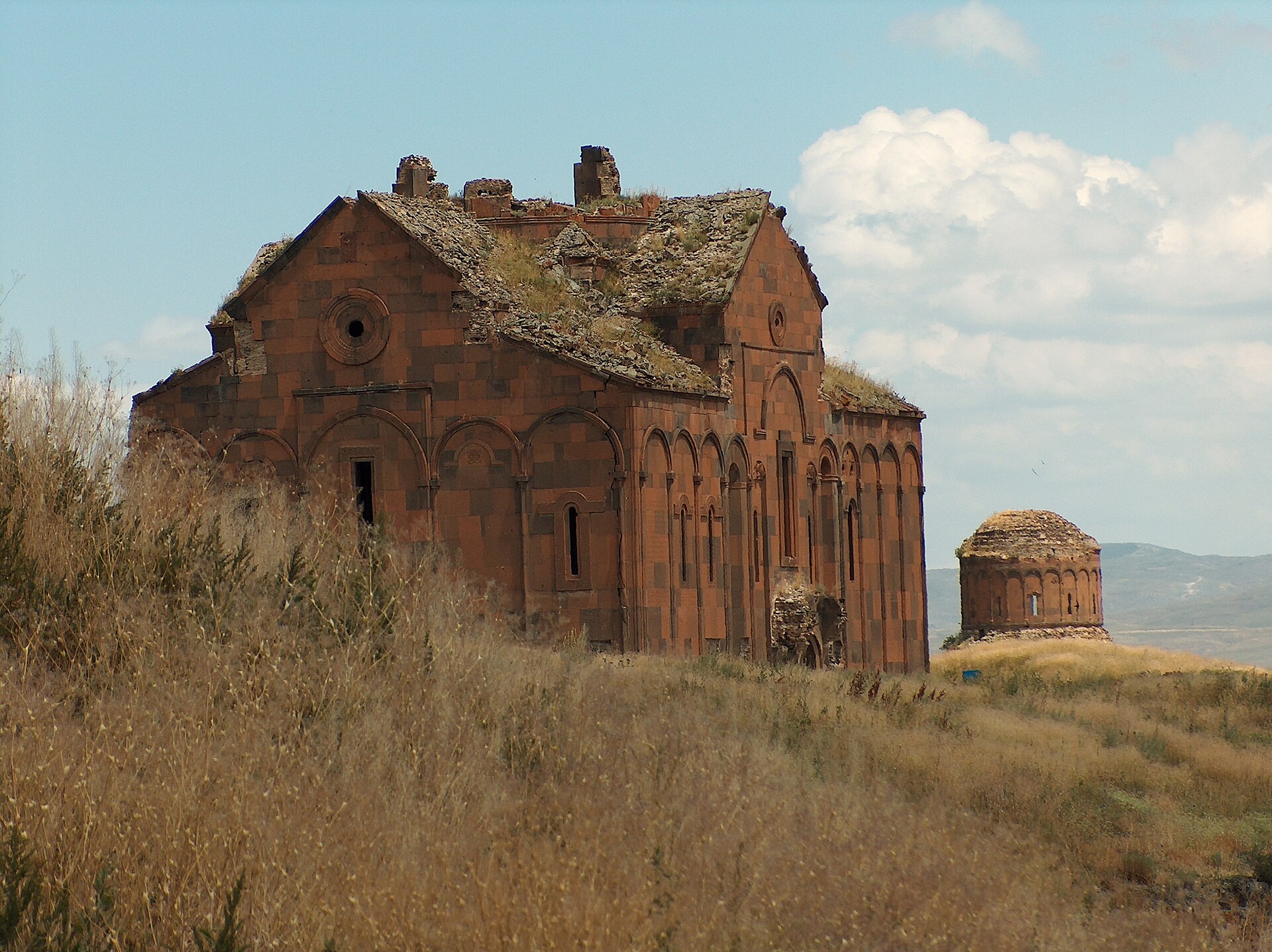
Turkey’s tourist map ends, roughly, at Ankara. West of it: Ephesus, Cappadocia, the blue coast. East of it: a plateau that climbs towards Iran and Armenia, carrying some of the most important — and least visited — medieval buildings between Vienna and Samarkand.
This route runs east to the Armenian border, then south to Mardin, and it rewards exactly one kind of traveller: the kind who does not need each day to produce a famous name.
Kars and Ani: the city of a thousand churches
Ani (UNESCO, inscribed 2016) was once a capital of the Armenian kingdom, with a population that medieval sources put on par with Constantinople’s. Today it is a grassland site on a ravine, directly on the closed frontier with Armenia — you can look across the river at the other country.
What survives is staggering: the Cathedral of Ani (989–1001), whose pointed arches predate Gothic architecture by decades; the church of St Gregory with its exterior frescoes in Armenian and Georgian; the city walls; a Zoroastrian fire temple underneath a mosque. The comparison with Gothic is not a tourist-brochure flourish — architectural historians have argued seriously about the traffic of masons between Ani and Europe.
Base yourself in Kars, a Russian-grid garrison town famous for gruyère-style cheese, honey and the bleakness that Orhan Pamuk turned into the novel Snow.
Van: a lake, a castle, a cat
Lake Van is Turkey’s largest lake — soda water, no fish survive it, and the light on it is lunar. The town of Van sits under a colossal Urartian citadel (9th century BC) and makes a good two-night stop.
Thirty minutes away by minibus is Akdamar Island, whose 10th-century Armenian Cathedral of the Holy Cross carries exterior relief carvings — Jonah and the whale, David and Goliath — that are among the finest surviving stone narratives of the medieval East. And, yes: the Van cat, white and odd-eyed, is a real local breed and a real local obsession.
Mardin: the honey city
Drive south and the plateau drops towards Mesopotamia, and Mardin appears — tiers of honey-coloured stone houses stacked on a hillside, every façade looking across the plain of the Tigris toward Syria.
Mardin is an Arab, Kurdish, Assyrian and Turkish town at once. The Great Mosque and the 40-minaret Zinciriye Medrese anchor the old town; the nearby monastery of Deyrulzafaran was the seat of the Syriac Orthodox Church for over six centuries. In the bazaars, the sweet of choice is cemlin, and the coffee arrives flavoured with menengiç — roasted wild pistachio.
Divriği, if you drive
The outlier of the route, and the reason to consider renting a car for part of it: the Great Mosque and Hospital of Divriği (UNESCO, 1985), a 13th-century complex whose three portals are covered in carving so dense and so individual that no two studies agree on its iconography. UNESCO’s citation calls it a masterpiece of Islamic architecture — and you will likely have it nearly alone.
Practical notes
- Buses connect all the main towns; distances are big and nights are the efficient way to cover them. Dolmuş (shared minibuses) fill the gaps.
- Season: May–June and September–October. The plateau is hot in July and genuinely cold in winter — Erzurum is one of the coldest cities in Turkey.
- Checkpoints on the road to Ani are routine; carry your passport.
- Politics: this region touches several live conflicts. Read current advice from your own foreign ministry before setting the itinerary, and again before crossing into the border provinces.
Nobody comes back from Eastern Turkey with a checklist. They come back with the sense of having read the first chapter of a much longer book.
Frequently asked questions
How many days do you need for Eastern Turkey?
A tight loop of Erzurum, Ani/Kars, Van and Mardin takes about ten to twelve days by bus and dolmuş. Two weeks lets you add Divriği, Trabzon's Sumela Monastery and the Black Sea coast without hurrying.
Is it safe to travel in Eastern Turkey?
The main tourist corridor — Erzurum, Kars, Van, Mardin, Diyarbakır — is regularly travelled and generally calm. Border zones near Syria and Iraq are a different matter; check your own government's current advice and stay out of restricted military zones, which are signposted.
Can you visit Ani independently?
Yes. Shared minibuses run from Kars to the Ani entrance in season, or a taxi for the 45-minute trip costs a modest fixed rate. Bring your passport: the site sits directly on the closed border with Armenia, and checkpoints are part of the drive.