Practical · Regional
What to Wear in MENA: A City-by-City Answer
The dress code question is the one every first-time visitor asks and almost nobody answers precisely. What is legally required in Iran, what is merely respectful in Morocco, and why shorts are the single most misleading item in your suitcase.
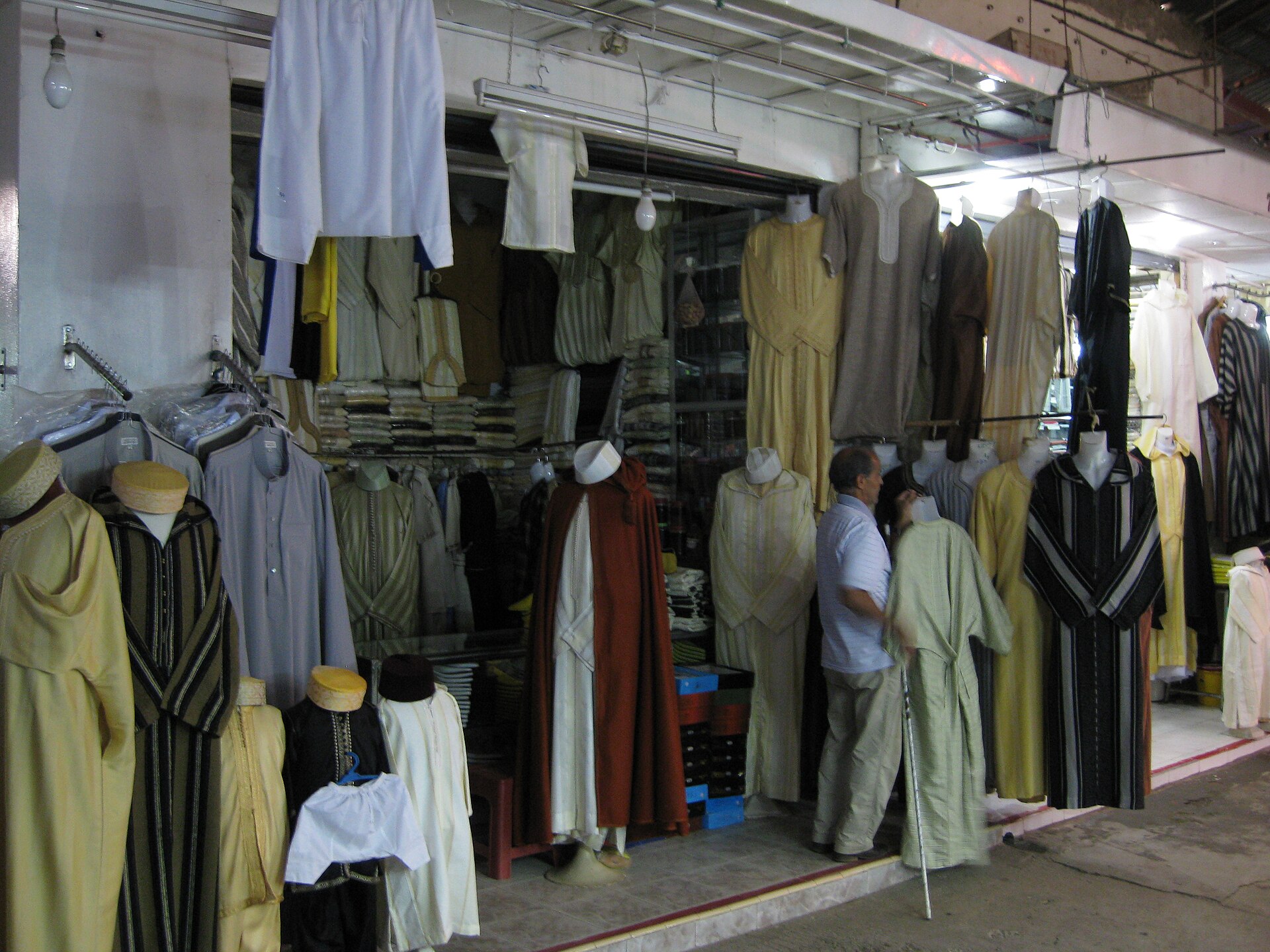
The dress code question gets answered badly almost everywhere. The usual answer — “dress modestly” — is true and useless: it does not tell you whether shorts are fine in Amman (they’re not, really), whether you need a scarf in Cairo (you don’t, except in mosques), or what happens if you get it wrong (nothing dramatic, mostly).
Here is the specific version.
The one principle that explains everything
Dress in MENA is not primarily about modesty in the Victorian sense. It is about respectability — being visibly a person who is taking the place seriously, rather than a visitor treating a city as a beach.
The practical translation: cover shoulders, cover knees, keep it loose, and you will be treated as a serious traveller in every country in the region. Everything else is detail.
Two genuine bonuses come free with this. Loose covering clothing is measurably cooler in dry heat than tight cotton, because it shades the skin and allows airflow. And you will be approached differently — more often helped, less often sold to.
Country by country
| Country | Women: hair | Women: arms/legs | Men: shorts | Notes |
|---|---|---|---|---|
| Iran | Covered — legal requirement | Cover arms and legs; loose tunic over trousers or a manteau | Not worn in public | Check current rules before travel; enforcement changes over time |
| Morocco | Optional | Knees and shoulders covered outside resort areas | Not in medinas or markets | The most relaxed of the “conservative” destinations |
| Tunisia | Optional | Knees and shoulders covered in towns | Acceptable on the coast only | Beach resorts are their own world |
| Jordan | Optional | Knee-length or longer; shoulders covered | Not in Amman or Petra’s village | Very used to visitors; the standard is respectability, not strictness |
| Egypt | Optional | Shoulders and knees covered | Not in cities | Tourist areas are lenient; mosques are not |
| Türkiye | Optional | Fully relaxed in Istanbul and on the coast | Fine in most cities | The least restrictive country in this table |
| Gulf (UAE, Qatar, Oman) | Optional, but a scarf helps | Knees and shoulders covered in malls and public buildings | Not in malls or souqs | Malls enforce a dress code; mosques require covering (abayas usually lent) |
| Uzbekistan | Optional | Relaxed; knees and shoulders safer | Not in bazaars or religious sites | Central Asia is more relaxed than the Middle East stereotype suggests |
That table is the short answer. The long answer is the three items below.
Item one: the scarf is a tool, not an obligation
Outside Iran, a light scarf is the most useful thing in your bag — and not because of modesty rules.
- For mosques. Most mosques require women to cover their hair and both sexes to cover shoulders and legs. Carrying a scarf means you can enter any of them without borrowing a loaner at the door.
- For sun. In the desert and at high altitude, a scarf over the head and neck is better sun protection than a hat and much cooler.
- For wind and dust. In Egypt, Jordan and the Gulf, a scarf is the difference between a sandstorm being an adventure and being an ordeal.
- For cold. Desert nights in winter are genuinely cold. A scarf is insulation.
Take a large, light, plain one. It will be used daily, and not for the reason you expected.
Item two: layers, because MENA is not one climate
This is where most packing lists fail. The region spans the Mediterranean, the mountains of Iran, the deserts of Egypt, and the high plateaus of Central Asia — and the daily temperature swing inside each of those is often more significant than the difference between them.
- Tehran sits below a mountain range; the north of the city is significantly cooler than the south, and the same day can be a fleece morning and a T-shirt afternoon.
- Desert regions (Wadi Rum, Yazd, parts of Morocco) can be over 35°C by day and under 10°C at night, in the same week.
- Türkiye and the Mediterranean coast have real seasons; winter is cold and wet, not warm.
- Central Asia (Uzbekistan, Iran’s north-east) has proper winters, with snow.
The practical kit: a light long-sleeved layer, one warm mid-layer, and a windproof outer that also handles a bit of rain. Everything loose. Almost nothing heavy.
Item three: shoes matter more than clothes
Three separate shoe problems, and they are not compatible:
- Stone and dust. Archaeological sites, medinas, wadis. You want closed shoes with grip. Petra in particular will punish anything else — the rock is polished smooth by centuries of feet and there are 800-odd steps to the Monastery.
- Mosques. You will take them off, repeatedly, and often carry them. Slip-on beats laced, every time.
- Heat. Your feet will swell in the afternoon in summer. Allow for it.
The workable answer is one pair of sturdy closed shoes you can slip on and off, plus sandals for the evening.
What not to bring
- Shorts — as above. They take up space and are unhelpful outside resorts and hotel grounds.
- Heavy jeans — hot, slow to dry, and take up a quarter of your bag.
- Too much of anything white or sheer. A white linen shirt looks great until it is transparent against a dark tunic in full sun.
- A second pair of formal shoes. Nobody will notice.
- Full toiletries. Everything you need is available, and pharmacies in the region stock everything a Western pharmacy does.
Three things you will learn on the ground
- Standards vary by neighbourhood, not by country. A shopping street in a capital and a village in the interior of the same country can differ completely. Watch what people of your gender are wearing and match the local register.
- Being wrong is not a crisis. Turning up slightly under-dressed to a market in Morocco will get you ignored, not confronted. In Iran it will get you told, politely. Adjust and move on.
- Your grandfather’s linen shirt is the best item in the bag. Long-sleeved, loose, light, covers shoulders — it solves the dress question and the heat question at once.
The verdict
Cover shoulders and knees, keep everything loose, carry a scarf, bring shoes you can walk in and slip off. That kit works in every country in the region, from Tehran to Marrakesh, and it will also make you cooler in summer and warmer in winter than a suitcase full of beachwear.
The phrase to hold on to is not “dress modestly”. It is “dress like a person who is taking this seriously” — which, incidentally, is also how you get treated.
Frequently asked questions
Do I need to cover my hair?
In Iran, yes — it is a legal requirement for women, and you should check the current rules before travelling, because enforcement and expectations vary over time. Everywhere else in the region, covering your hair is optional. In Morocco, Tunisia, Jordan, Egypt and Türkiye you will see plenty of local women with uncovered hair. In the Gulf, a scarf is useful for entering mosques.
Can men wear shorts?
In tourist resorts and hotel grounds, yes. In city streets, markets and religious areas, shorts on men are read as undressed — more so than the equivalent on women. Lightweight trousers are the practical answer almost everywhere.
How much does the dress code actually matter?
It matters for two reasons, one practical and one social. Practically, covering up is genuinely cooler in desert heat and protects you from sunburn. Socially, how you are dressed determines how you are treated — dressed respectfully, you get welcomed; dressed in beachwear in a souq, you get treated as a tourist to be priced accordingly.