Food · Iran, Turkey
Turkish Coffee vs Iranian Tea: Two Ways to Sit Still
One is UNESCO-listed and finished in three sips; the other lasts all afternoon. A traveller's guide to the coffee and tea cultures on either side of the border.
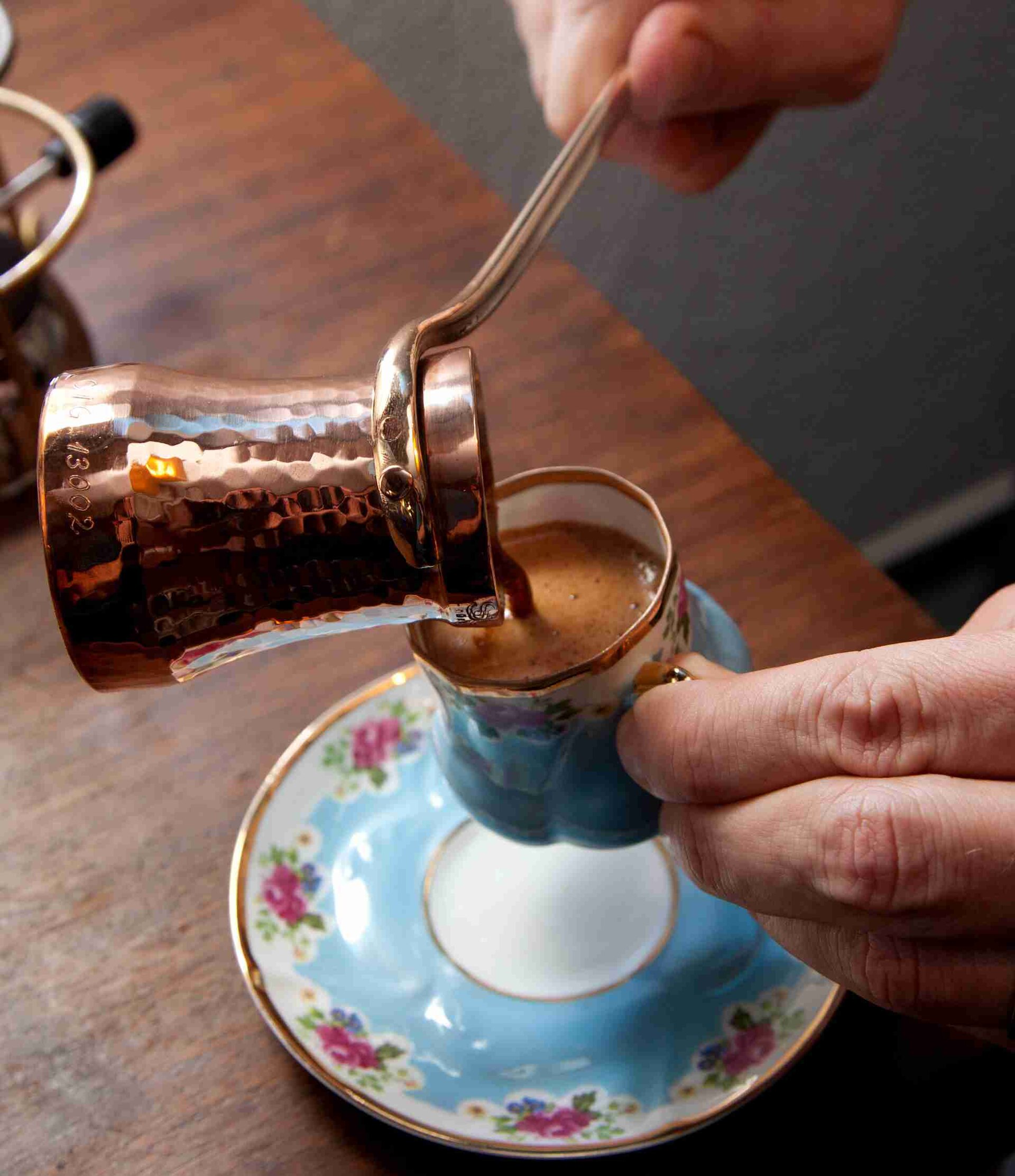
Cross the border between Turkey and Iran and the drink in your hand changes completely — coffee becomes tea, small becomes smaller, and the whole grammar of hospitality switches. Neither country is unusual in this; both are extreme versions of something true across the region: what you are handed when you sit down is never just a drink.
Turkish coffee: the UNESCO-listed three minutes
In 2013, UNESCO inscribed Turkish coffee culture and tradition on its Intangible Heritage list — the first coffee culture in the world to receive the honour. The inscription’s framing is precise about what’s being protected: not a beverage but a body of knowledge, including the preparation (“coffee ground finely, cooked with water and sugar if desired in a small pot cezve”), the serving in small cups, and — notably — the social function, including fortune-telling from the grounds.
The method produces something no other coffee style matches: an unfiltered cup where the very finest grind meets boiling-adjacent water directly, building a foam (köpük) that Turks treat as the mark of a well-made cup. The ritual rules:
- Order it by sweetness (sade plain, orta medium, şekerli sweet) — the sugar goes in during cooking, not after.
- Served with water to cleanse the palate, and often a piece of lokum (Turkish delight).
- Drink to the last sip before the grounds, then stop. The muddy final centimetre is not a beverage.
- The empty cup may then be turned over for kahve falı — fortune-telling from the patterns of grounds. UNESCO lists it as part of the heritage, which makes it the world’s only divination practice with cultural-property status.
Turkish coffee is quick to make and quick to drink — but it is almost never consumed alone or standing. The cup is an excuse; the sitting is the point.
Iranian tea: the afternoon in a glass
Iran drinks tea the way Turkey drinks coffee: totally, structurally, all day. Black tea (čay) arrived in Iran in the nineteenth century — Encyclopaedia Iranica documents how commercial cultivation took root in Gilan province on the Caspian coast after early attempts to grow Chinese seed in various provinces — and displaced coffee, which had dominated Persian coffeehouses under the Safavids, within a generation or two.
The Iranian version is built for length:
- Tea is brewed as a concentrate (zokhm) in a pot sitting atop the kettle or samovar; each person pours and then dilutes to their own strength from the same pot. One brew serves an entire afternoon of guests.
- It is served in a small waisted glass (estekan) so you can read the colour: pale means weak, and pouring off the deep amber concentrate is a small art.
- Flavourings are subtle — a cardamom pod in the pot, a strip of dried lime peel, a cinnamon stick — never milk.
- Alongside comes rock candy (nabat) on a stick, or dates, or noghl sugar-coated almonds: the sweet is held between the teeth while the tea sips through it.
- In the old teahouses of Yazd and Isfahan, the tea is qaeli — a thicker, darker brew that simmered all day over the fire, ordered by strength and served on low stools around a single glowing samovar.
Where Turkish coffee compresses its sociality into three intense minutes, Iranian tea distributes it across hours. Neither is more hospitable. They are just two different clocks.
For the traveller
In Turkey: accept the first coffee offered — in a shop, a carpet dealer’s, a home. Refusing a refill is fine; the shaking-cup gesture ends the service. And when the grounds are read, play along. It’s the most charming payment system ever devised.
In Iran: the teahouse is the goal, not the drink. Seek out the old ones — roofed with pictures, stained glass, water pipes retired or not. Say čay-e qaeli for the dark stuff. Hold the nabat between your teeth at least once, even if it feels theatrical. It is, gloriously.
And notice what both cultures have in common: nobody, anywhere in either country, asks you to take your drink away. The cup is the seat. The seat is the conversation.
Frequently asked questions
Why is there no milk in Turkish coffee or Iranian tea?
Both drinks are built on intensity: coffee ground to powder and cooked with its water, tea brewed strong and diluted to taste. Milk would smother the point. The local dairy habits went into other things — ayran, doogh, kaymak — while the cup stayed black.
What is kahve falı?
Turkish coffee fortune-telling. The cup is inverted onto its saucer, the grounds slide and settle into shapes, and the reader interprets them. It is social theatre more than prophecy — a structured reason for the conversation to continue, which is the real function of most coffee rituals.
Which should I try first if I'm visiting both countries?
Whichever country you're in — each drink is a key to its own pace. In Turkey, ask for a orta (medium-sugar) coffee and don't drink the last mouthful of grounds. In Iran, find an old teahouse, order qaeli tea, and accept the rock candy (nabat) even if you don't use it.