Food · Morocco
Three Glasses of Atay: How Morocco Turned Mint Tea into a Ceremony
Morocco's national drink is green tea, mint and sugar — brought from China, refused by no one. The ritual of atay, and how to drink it properly.
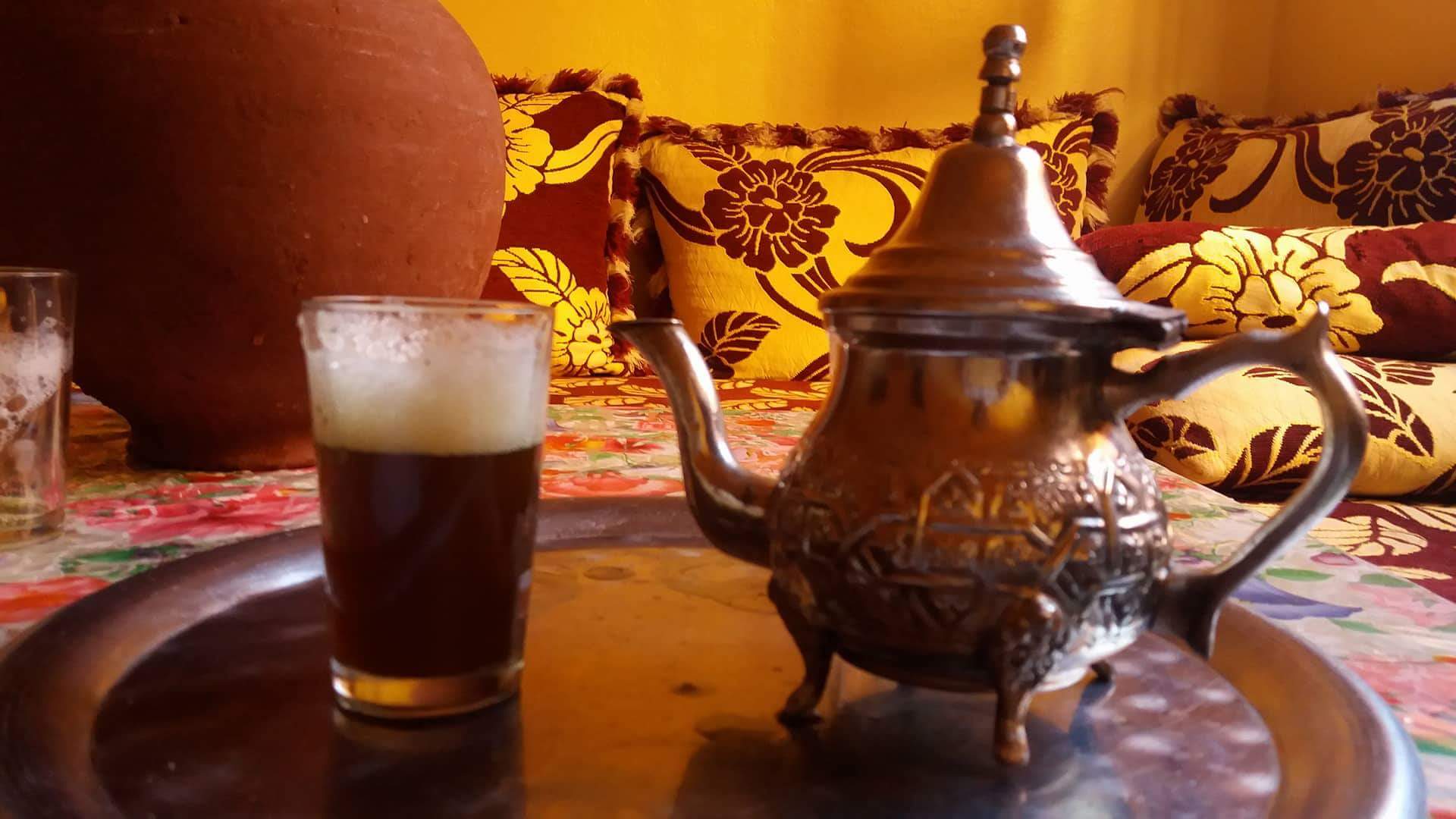
Of all the drinks in the world that could have become a national identity, Morocco chose one whose ingredients grow nowhere in Morocco: Chinese gunpowder green tea. That accident shaped the most complete tea ceremony in the Arab world.
A drink of imports
The tea arrived in the 18th–19th centuries via British ships trading to the Maghreb; the mint — African spearmint, nana’ — grew in every courtyard; and sugar came up the same Saharan caravan routes that had carried gold and salt. Morocco fused them into atay: strong, sweet, mint-saturated, served in quantity, to everyone, at any hour.
It is now so central that the phrase “tea and talking” is simply how hospitality is described. Tea is made by the head of the household, and it is made in front of the guest — the preparation is part of the welcome, never done out of sight.
The ritual, in order
- Rinse the tea. Leaves go in the pot, get a quick wash with boiling water — poured off. Moroccans say this “wakes” the tea and removes bitterness.
- Boil short. Fresh water, the mint, and a sugar loaf’s worth of sugar go in together; the pot sits on the coals for a few minutes. Metal pots only — you are steeping, not stewing.
- The test glass. The host pours one glass and pours it back into the pot, mixing the brew evenly. Like decanting.
- The high pour. Tea goes into glasses from 30–50 cm up, a thin stream producing the q’tra — the foam crown. No foam, no respect.
- Three glasses. The traditional service is three, progressively sweeter, summed up in the Maghrebi saying: the first glass is bitter like life, the second sweet like love, the third gentle like death.
How to drink it
- Take the glass in the right hand.
- Accept the first glass; that much is social grammar, not choice.
- Don’t blow on it — wait. The glasses are small and the pause is the point.
- If you are diabetic or avoiding sugar, say so early and without apology; hosts will make a separate pot and will not make it a thing.
Where to taste it well
- A family home, if you are ever invited — that is the standard, and everything else is an echo.
- Medina tea shops in Fez and Marrakech pour for customers haggling over rugs; drinking with the merchant is how negotiations begin, and refusing can end them.
- At the hammam, tea comes after the steam, sweet and restorative, and is arguably the best version of itself.
One caution for travellers
The sugar load is real: three glasses a day across a fortnight is a lot of sugar by any other standard. Order without sugar is possible (“bla sukkar”) but changes the drink materially — the better compromise is two glasses instead of three.
Atay is the clearest case study on this site of a foreign ingredient becoming native: within a century, a Chinese tea leaf, Saharan sugar and a courtyard mint fused into something no other country makes, and no Moroccan can imagine being without.
Frequently asked questions
What is Moroccan mint tea made of?
Gunpowder green tea (Chinese, not Moroccan-grown), a large handful of fresh spearmint (nana'), and a striking amount of sugar, brewed in a silver teapot (berrad) and poured from height into small glasses.
Why is tea poured from so high?
Aerate-and-foam: the high pour cools the tea slightly, dissolves the sugar evenly, and produces the crown of foam (q'tra) that shows the tea was made properly. Returning a glass without foam insults the pour.
Can I refuse mint tea?
You can, but it costs goodwill. Atay is the vehicle of Moroccan hospitality and is offered to everyone — shopkeeper, host, stranger. Take at least one glass; pace yourself with the sugar if you are drinking it all day.