Food · Jordan
Al Mansaf: Jordan's Feast Built on Dried Yoghurt
Jordan's national dish is a lamb stew poured over flatbread and jameed, a fermented dried yoghurt that nomads could carry. UNESCO listed it in 2022 — here is what it means and how to eat it properly.
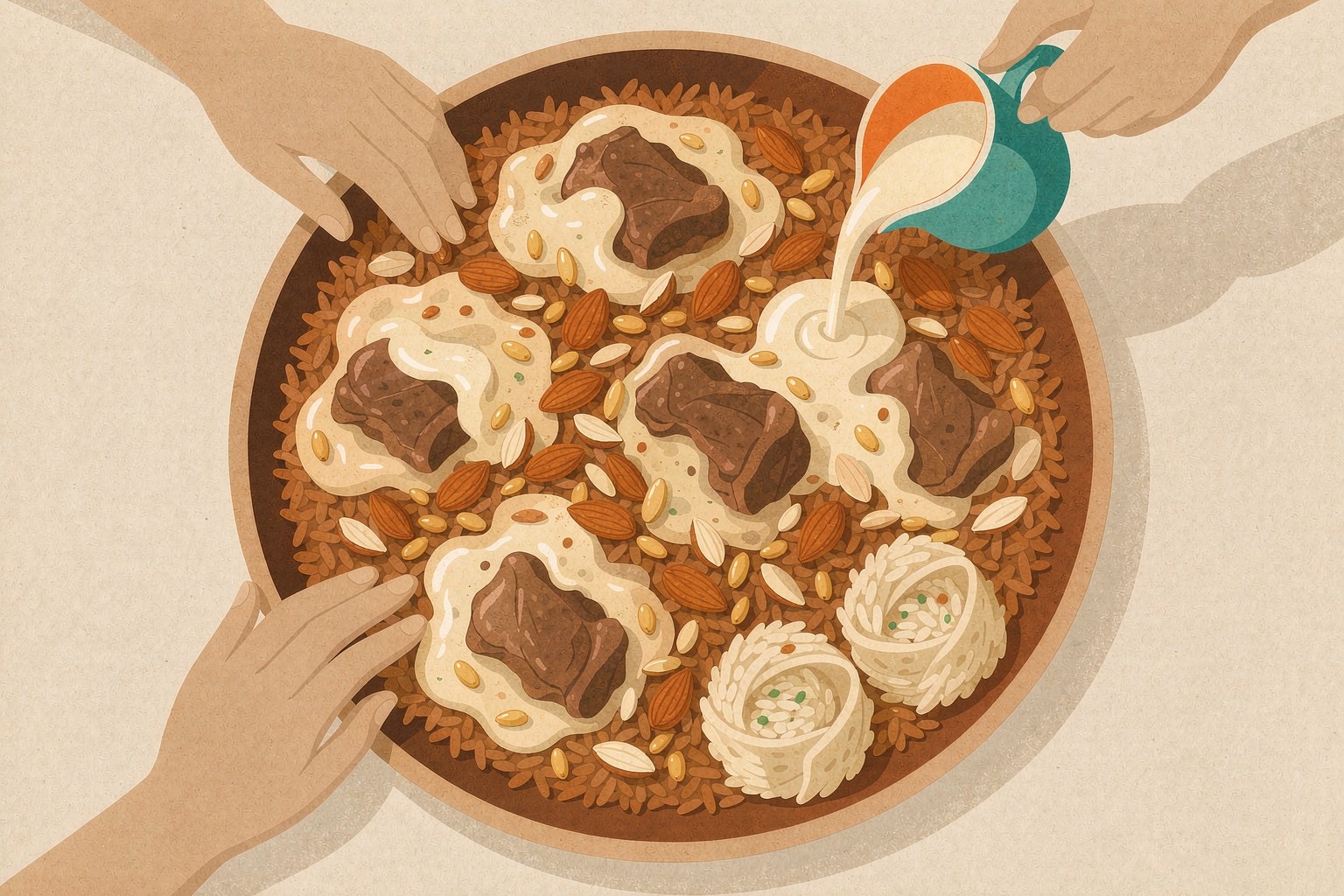
Every country has a dish it serves when it wants to say something more than “dinner”. In Jordan that dish is mansaf: lamb simmered in a sauce of fermented dried yoghurt, poured over flatbread and heaps of rice, finished with toasted nuts, and placed in the middle of the room for everyone to eat from the same platter, with the right hand.
UNESCO inscribed it in 2022 (element 01849) not because the recipe is rare — lamb, rice and yoghurt appear across the region — but because of what the dish does: in Jordanian social life, mansaf is served at weddings and at funerals, at reconciliations and at Eid. It is the meal that marks every threshold.
The ingredient that makes it Bedouin
The distinctive element is jameed: yoghurt that has been drained, salted, rolled into hard cream-coloured cones and dried until it keeps for months without refrigeration. It is one of the great nomad technologies — a way to carry the milk of a herd across a season of marching. Grated and dissolved into the cooking liquid, jameed gives mansaf its sour, deeply savoury base that no fresh yoghurt can imitate.
Kerak, south of Amman, is the town most associated with the best jameed, and shops there still hang the white cones in windows like produce.
The choreography of the platter
A proper mansaf is built in layers — flatbread first, absorbing the sauce, then rice, then the lamb, then the sauce poured over everything at the table, then pine nuts and almonds. But the real structure is social:
- The head of the household or the host seats the guests of honour nearest the platter.
- You eat from the wedge directly in front of you — reaching across the platter is the classic faux pas.
- The best pieces of meat are offered, pressed, almost insisted upon. Refusing outright is harder than accepting; this is the region’s hospitality logic in miniature.
- In Bedouin tradition a mansaf could close a feud: two parties eating from one platter made the settlement public and binding.
Eating it as a visitor
You will meet mansaf at a wedding or a family invitation rather than — mostly — in restaurants, though good ones exist in Amman, Madaba and Kerak. Eat with the right hand, take modest portions at first (refills are relentless), and pace yourself: the dish arrives again at the next occasion whether you are ready or not.
The point is not the lamb. It is that everyone at the table is, for the length of the meal, eating from exactly the same place.
Frequently asked questions
What is jameed?
Jameed is yoghurt that is drained, salted, shaped into hard white cones and dried in the sun — a Bedouin preservation technique that turns milk into a storable staple. Reconstituted, it becomes the tangy sauce of mansaf. The town of Kerak is especially known for it.
Do I eat mansaf with cutlery?
Traditionally no — guests gather around a shared platter and eat with the right hand, folding rice and lamb into small balls. Hosts will usually offer spoons if you prefer. Take from the section of the platter directly in front of you rather than reaching across.
Is mansaf only served at weddings?
No. It marks weddings, funerals, Eid, Friday gatherings, reconciliations and the reception of guests — UNESCO's file describes it as the dish of both celebration and mourning. In Bedouin custom, a mansaf could even settle a dispute: sharing the platter sealed the peace.