Food · Azerbaijan · Iran · Kazakhstan · Kyrgyzstan · Türkiye
One Bread, Five Countries: Lavash, Katyrma, Jupka, Yufka
UNESCO listed the flatbread culture of five countries in 2016 under four different names. It takes at least three people to make, it appears at weddings and funerals, and it is the single most useful thing to understand about eating in the region.
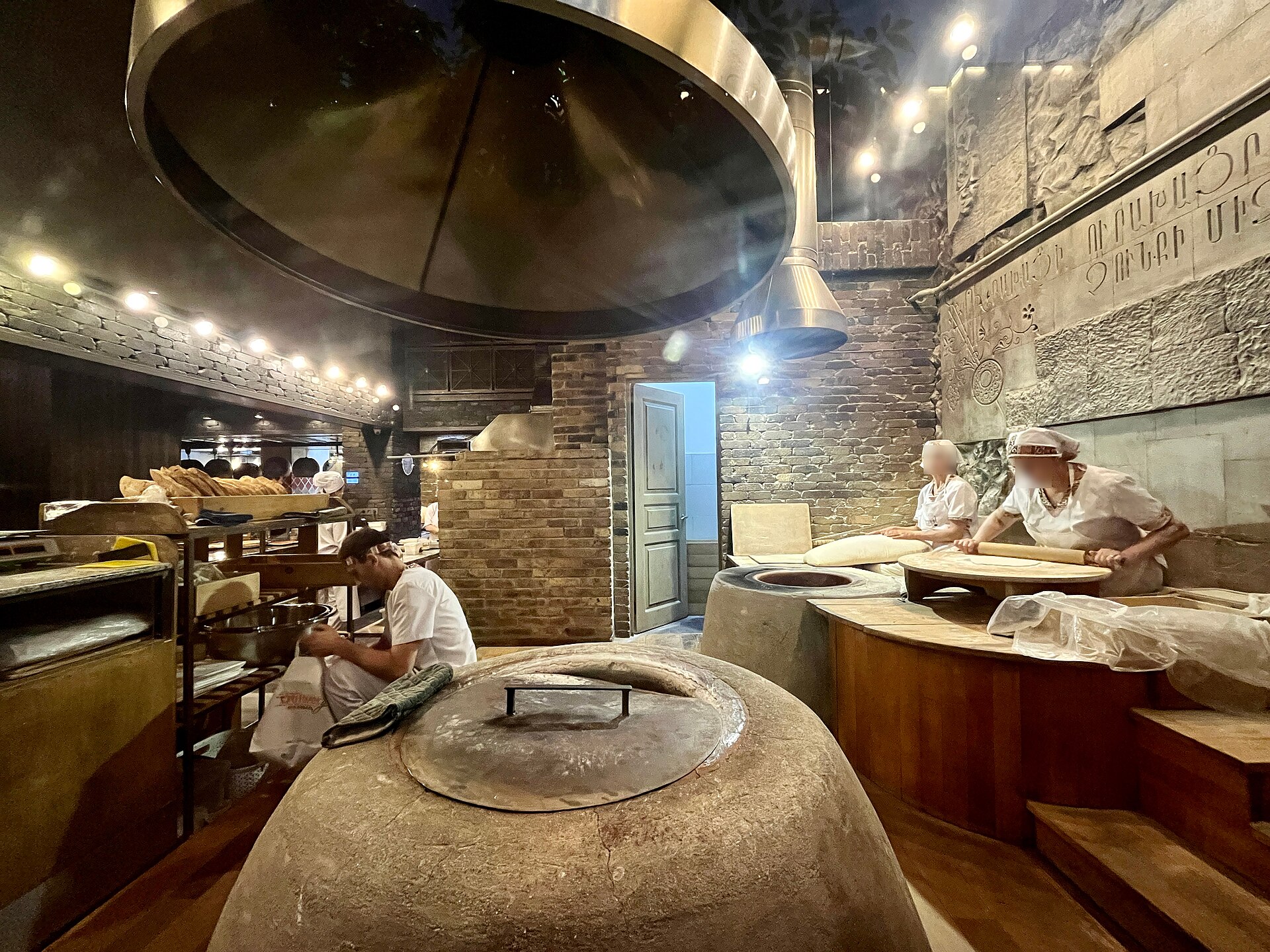
Flatbread is the one food you will eat every single day in this region without ever being told its name. UNESCO inscribed its making and sharing culture in 2016 under four names at once — Lavash, Katyrma, Jupka, Yufka — nominated jointly by Azerbaijan, Iran, Kazakhstan, Kyrgyzstan and Türkiye (reference No. 01181, decision 11.COM 10.B.2).
Four names in one inscription is unusual, and it is the key to understanding the element. The list is not protecting a recipe. It is protecting a division of labour and a set of obligations.
It takes at least three people
This is the most concrete fact in the nomination file, and the one worth repeating: making the bread involves at least three people, usually family members, each with a defined role.
- One prepares. Kneading the dough, dividing it, resting it, keeping the batch moving.
- One shapes. Rolling or stretching it thin — often very thin, thin enough to see light through.
- One bakes. Managing the heat and pulling the bread at the right second, because a flatbread bakes in well under a minute.
That third role is why the practice is inherently social. You cannot walk away from a tandyr. In rural areas neighbours join in as a matter of course, which is exactly how the nomination frames it: a shared activity rather than a household chore.
Three ovens, three ideas about heat
The nomination names three traditional baking surfaces, and they produce genuinely different breads:
| Device | What it is | What you get |
|---|---|---|
| Tandyr / tanūr | An earth or stone oven sunk into the ground, with the fire inside | Bread slapped onto the hot inner wall; blistered, smoky, pliable |
| Sāj | A large convex metal plate laid over a fire | Thin, soft, quickly made; the everyday option |
| Kazan | A cauldron — used for doughs baked against the sides or over the rim | Thicker, denser forms, more common in Central Asia |
If you see a woman slap a sheet of dough onto the inside wall of a hole in the ground and pull it out ninety seconds later with a metal hook, you are watching the element UNESCO listed. It is worth standing and watching for a few minutes rather than photographing it and moving on.
Where the bread shows up — and what it means
Here the nomination gets specific, and the specifics are the reason the bread matters:
- Weddings, Azerbaijan and Iran — the bread is put on the bride’s shoulders, or crumbled over her head, to wish the couple prosperity.
- Weddings, Türkiye — the bread is given to the couple’s neighbours, a public act that extends the marriage to the street.
- Funerals, Kazakhstan — bread is believed to be prepared so that the deceased is protected while a decision is made from God.
- Funerals, Kyrgyzstan — sharing the bread is held to provide a better afterlife for the deceased.
- Prayers and holidays, everywhere — the bread is present at births, at religious holidays, and at prayer, as a thing that is shared rather than merely eaten.
Read that list again and notice what is happening. The bread is not decoration at these events; it is the medium through which the event is communicated to the community. A wedding without bread given to the neighbours is not fully announced. A funeral without bread is not fully observed.
Why this matters to a traveller
Three practical consequences, all of which will improve your trip:
- You will be judged by how you handle the bread. Tear it with your right hand, share from the same piece rather than claiming one, and never throw it away in public. Bread is treated with a respect that has nothing to do with its price.
- Accepting bread is accepting hospitality. When a shopkeeper, a driver or a host hands you a piece straight from the oven, refusing is a small but real rejection. Take it.
- The bakery is the cheapest information you will find. Ask what the bread is called, and you will get the local name, the local oven, and usually a story about someone’s grandmother. This is a better use of five minutes than most museums.
The economics underneath
There is a harder edge to the inscription. Traditional flatbread is cheap, labour-intensive and made by women in many communities. Industrial bakery bread is cheaper, faster and made in a factory. As urban life compresses the time available for cooking, the three-person workflow described in the nomination is exactly what gets squeezed out first — and when the bread is bought instead of made, the intergenerational transmission of the skill stops without anyone deciding to stop it.
That is the pattern UNESCO is tracking: the food survives, the culture around it thins.
The verdict
Of all the food elements on the Representative List, flatbread is the most immediately useful to understand, because it is on the table three times a day. Learn one word for it per country, learn to tear it with your right hand, and learn what it means when someone hands you a piece you didn’t ask for.
You will have understood more about the region than a month of reading about it would teach you.
Frequently asked questions
Are lavash, katyrma, jupka and yufka the same bread?
They are different breads within one shared culture of making and sharing flatbread. The names split roughly by language area — lavash in Armenian/Azerbaijani/Persian usage, yufka in Turkish, katyrma and jupka in Central Asia — but the social function described in the UNESCO nomination is common to all of them.
Why does it take three people?
Because the work splits naturally: one person kneads and divides the dough, one rolls or stretches it thin, and one manages the oven and bakes, because the bread cooks in under a minute and cannot be left unattended. In rural areas neighbours join in, which is how the practice stays communal rather than domestic.
Does the bread have religious significance?
Not doctrinally, but it is ritually present at almost every life event — put on a bride's shoulders or crumbled over her head in Azerbaijan and Iran, given to neighbours in Türkiye, and prepared at funerals in Kazakhstan and Kyrgyzstan. The nomination treats it as an expression of hospitality and of shared cultural roots.