Food · Region-wide
Dates: The Fruit That Built the Desert
The date palm was inscribed by UNESCO in 2022 on a joint nomination from fifteen Arab states. What it takes to grow, why medjool tastes different from barhi, and how to eat them.
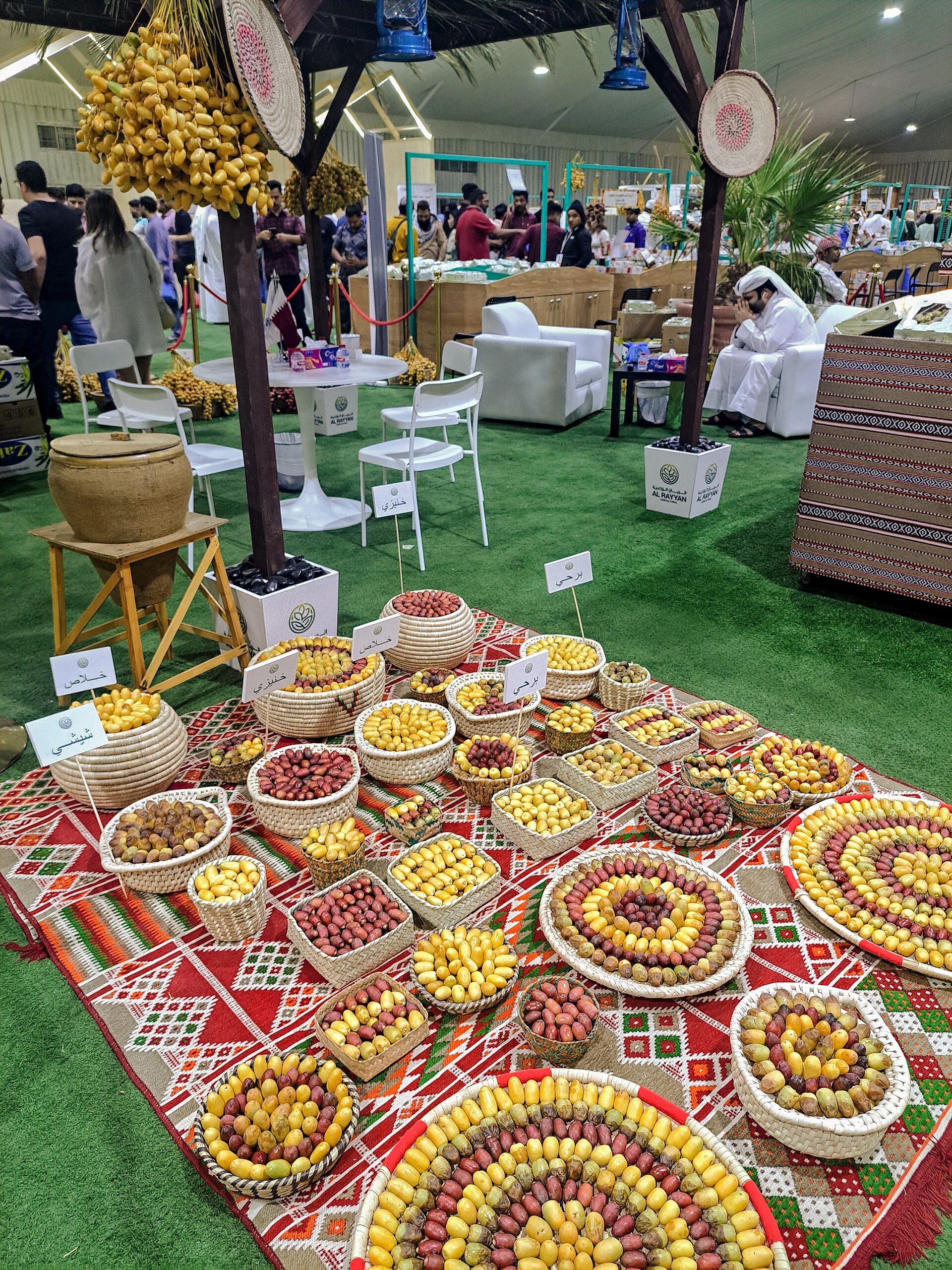
In 2022, UNESCO added the date palm to its Representative List of Intangible Cultural Heritage — on a joint nomination from fifteen states: Bahrain, Egypt, Iraq, Jordan, Kuwait, Mauritania, Morocco, Oman, Palestine, Qatar, Saudi Arabia, Sudan, Tunisia, the UAE and Yemen.
Fifteen countries agreeing on anything is news. Fifteen countries agreeing that a tree is heritage is a banal statement of the obvious, phrased in diplomatic language. The date palm is not one crop among many in the Arab world; it is the structural fact of life in the desert, and the inscription says so plainly: the tree’s roots “deeply penetrate the earth in search of humidity,” entire civilizations grew up around it, and its leaves, fronds and fibres furnished their crafts.
What the inscription actually protects
Read the UNESCO text closely and it is a list of skills rather than a list of ingredients:
- Caring for and cultivating the palm — pollination done by hand, climbing, pruning, watering in an oasis where the water table must be managed.
- Using its parts — leaves and fronds for baskets, mats, roofs, fences; fibre for rope; trunks for beams.
- The social rituals around it — harvest, wedding gifts, offering dates to guests.
- Its place in poetry and song, which in Arabic literature is not decoration but a whole register of imagery.
The palm is also the reason an oasis exists at all. Planted in layers — palms high, fruit trees in the middle, vegetables and fodder at ground level — it shades everything beneath it, cutting evaporation in a place where every drop is contested. Al-Ahsa in Saudi Arabia, inscribed as a World Heritage cultural landscape in 2018, is the largest oasis in the world and a working textbook of that system: some two and a half million palms, fed by springs, layered exactly this way.
The varieties that matter at the table
Travellers meet dates in a startling range, and the names are worth learning because the taste difference is enormous:
- Medjool — large, wrinkled, almost jammy. The sweetest and most exported; what most supermarket dates are.
- Deglet Nour (“date of light”) — from Algeria’s Tolga and Tunisia’s Nefzaoua, translucent amber, drier, honeyed. The classic with Arabic coffee.
- Barhi — eaten fresh, at the yellow khalal stage, when it is crisp and slightly astringent like a green apple. If you are in the region in late summer, this is the one to hunt down.
- Ajwa — small, black, dry, from the Medina region. Prized for religious association and expensive accordingly.
- Sukkary, Khalas, Khadrawi — Gulf and Iraqi varieties with distinctly different textures; Khalas from Al-Ahsa is a favourite for its caramel edge.
Palms are dioecious: male and female flowers grow on separate trees, and in commercial groves pollination is done by hand — a climber carries cut male sprigs up to the female flower clusters in spring, sometimes for fee. One male can serve dozens of females, which is why a good male palm is guarded like stud stock.
How to eat them like a local
- With coffee, not tea. In the Gulf, a plate of dates appears with the cardamom gahwa before anything else; take one with your right hand.
- With yoghurt or labneh at breakfast, especially in Iran and the Levant.
- Stuffed — with almond, walnut, tahini, or (in Morocco) a paste of almond and orange-flower water.
- In Ramadan, three dates and water is the traditional way to break the fast — sugar and potassium in the fastest possible delivery.
- Fresh, in season. If you can get barhi at the khalal stage, eat them like fruit, out of hand, and understand why the palm earned fifteen signatures.
The palm is the region’s oldest answer to a hard question — how to live where nothing else will — and its answer is still on the table, in a bowl, next to the coffee.
Frequently asked questions
What is the difference between medjool and other dates?
Medjool is large, soft and caramel-sweet — the variety most exported to Western supermarkets. Barhi is eaten fresh at the khalal stage, when it is yellow and crunchy like an apple. Deglet Nour, from Algeria and Tunisia, dries to a translucent amber and is the classic accompaniment to coffee. Ajwa from Medina is dark, dry and prized for religious association.
How many calories are in a date?
Roughly 60–70 calories per large medjool date, most of it natural sugar (glucose and fructose), with fibre, potassium and small amounts of magnesium. The high sugar content is exactly why they are the traditional food for breaking the Ramadan fast as well as for desert travellers.
Why does the Koran call the date palm a blessing?
The palm appears repeatedly in the Koran and the hadith, and Muslim tradition holds that the Prophet Muhammad said the best of a household's trees is the date palm. The religious weight explains why palm cultivation is supported by governments across the region, and why UNESCO's inscription speaks of poetry, songs and social rituals as well as agriculture.