Food · MENA
One Bread, Forty Names: The Flatbreads That Hold the Region Together
Lavash, khobz, pita, sangak, yufka — the MENA region runs on flatbread, and UNESCO has started protecting the making of it, not just the eating.
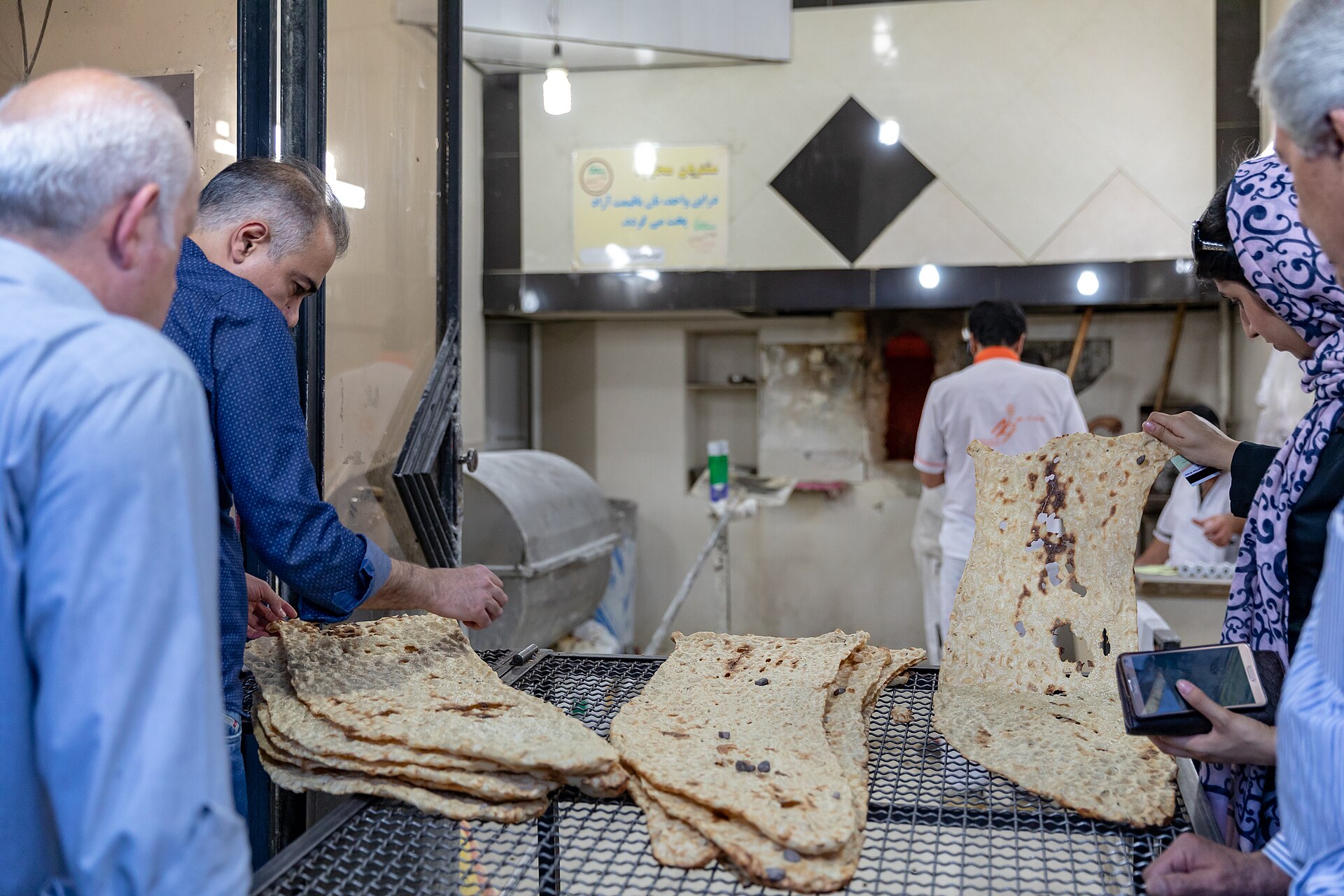
No food in the MENA region is more universal than flatbread, and none is more misunderstood. Travellers arrive expecting “pita” and meet a family of breads with forty names, a thousand-year-old technology, and — since 2016 — UNESCO protection.
The family tree
The differences come down to the oven:
- Tandoor breads — slapped onto the clay wall of a well-oven. Iranian taftoon and the Central Asian non/naan live here, thick-soft in the middle, blistered at the rim.
- Saj breads — draped over an inverted wok-shaped griddle. These are the paper-thin wraps: lavash (Armenia, Iran, Türkiye and east), markook (Levant, Gulf).
- Pocket breads — pita / khobz, leavened, the steam inflating a pocket that becomes a sandwich. This is the Egyptian, Levantine and Gulf daily bread, sold warm in stacks of five.
- Sangak — Iran’s specialist: a long, dimpled loaf baked on a bed of hot river pebbles, leavened with a piece of old dough that bakers have kept alive, in some cases, for generations.
The names are not synonyms. Ask for “pita” in Tehran and you will be understood and gently corrected — the bread is sangak or taftoon, and the difference matters to the people baking it.
What UNESCO actually protected
The 2016 inscription — flatbread making and sharing culture: lavash, katyrma, jupka, yufka, joint nomination by Azerbaijan, Iran, Kazakhstan, Kyrgyzstan and Türkiye — is one of the most-quoted and least-read entries on the ICH lists. It is not about a recipe. The nomination argues that what is endangered is the social system around the bread:
- the baking team — UNESCO’s text specifies at least three people, often family, each with a role — rolling, baking, stacking in rhythm;
- the neighbour participation in rural areas, where one household’s oven served a street;
- and the bread’s ceremonial economy: it is given at weddings (crumbled over the bride’s head in Iran and Azerbaijan for luck), shared at funerals, and exchanged at religious holidays.
The inscription’s own summary line: the flatbread “expresses hospitality, solidarity and certain beliefs that symbolize common cultural roots reinforcing community belonging.”
The bread as furniture
A practical note that every long-term visitor discovers: in much of the region, flatbread is not a side dish, it is cutlery, plate and napkin at once. Food is scooped with torn pieces; the bread is laid on the table as a placemat under kebabs; the last pieces mop the sauce from the platter. Throwing bread away, or setting it upside down in some households, is genuinely disrespectful — a point the etiquette guides on this site keep returning to.
Where to taste the range
- Iran: sangak hot from the pebble oven at breakfast; in Yazd, komaj — date-studded and turmeric-scented.
- Levant: manakish on saj dough at a morning counter, za’atar and oil folded into a roll.
- Gulf: khameer and chebab at Emirati breakfast tables.
- Central Asia: the non of Samarkand and Bukhara — dense, stamped, keeps for days and is a standard gift carried between cities.
Flatbread’s deepest function is the one UNESCO’s citation names and travellers feel immediately: it is the region’s shared utensil — the one object every cuisine on this site, from Fez to Samarkand, puts at the centre of the table.
Frequently asked questions
What is the difference between lavash, pita and khobz?
Pita (Arabic khobz) is leavened and puffs into a pocket; lavash is paper-thin, unleavened or barely so, and dried stiff for storage before being revived with water; sangak is an Iranian pebbled-oven bread leavened with a starter. The shapes follow the ovens: tandoor, saj, and the sloped stone bed of the sangak oven.
Why did UNESCO inscribe flatbread?
The 2016 inscription (No. 01181, jointly by Azerbaijan, Iran, Kazakhstan, Kyrgyzstan and Türkiye) protects the making and sharing culture — the social practice of baking together, at least three people with defined roles, and the bread's role at weddings, births and funerals. The craft chain, not the recipe, is what was judged to be endangered.
Can travellers watch flatbread being made?
Easily. Neighbourhood bakeries in Iran (sangak and taftoon), saj stalls in Lebanon and Jordan, and tandoor ovens across Central Asia all bake in public view, usually in the morning. Buy one and eat it immediately — flatbread is at its best for about ten minutes.