Food · Gulf states
Arabic Coffee and the Ritual of Generosity
Inscribed by UNESCO in 2015 across four Gulf states, Arabic coffee is less a drink than a protocol. How to receive it properly, and what refusing it means.
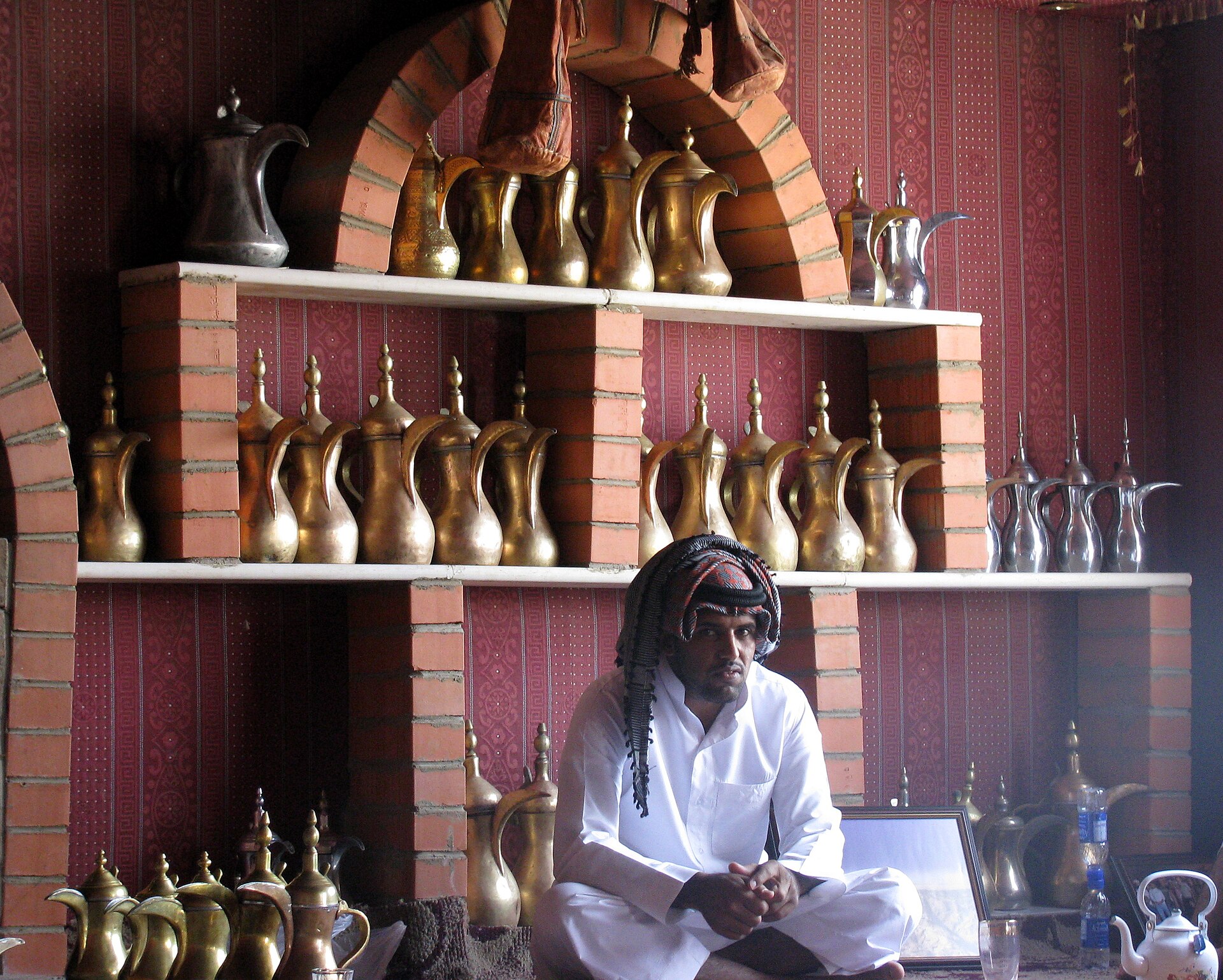
In 2015, UNESCO inscribed “Arabic coffee, a symbol of generosity” on its Intangible Cultural Heritage list, on a joint nomination from Oman, Qatar, Saudi Arabia and the United Arab Emirates. The name of the entry is the point: what was inscribed is not a beverage but an act of hospitality.
Three years earlier, in 2013, UNESCO had inscribed “Turkish coffee culture and tradition” for Turkey. Put those two entries side by side and you have the region’s clearest statement about coffee: in this part of the world, coffee is social infrastructure.
What you’ll actually be served
Arabic coffee (qahwa) is nothing like the espresso tradition or the filter coffee most visitors know:
- Colour: pale gold to amber. The beans are roasted lightly, sometimes barely at all.
- Flavour: cardamom-forward — often dominant — with saffron in some traditions, and no sugar added during brewing.
- Serving: in a small handleless cup, the finjal, poured from a long-spouted pot, the dallah. Expect to be given a date with it, often a soft one.
The contrast with Turkish coffee is complete: Turkish is dark, finely ground, brewed with sugar to order, and served in a small cup with a glass of water and often a piece of Turkish delight. Iran sits in a third tradition entirely, where the default is tea — heavily sweetened, often with cardamom and rosewater.
The protocol — and why it matters
This is the practical part, and it is genuinely useful on a first visit to the Gulf:
The cup is deliberately small. It is meant to be refilled, sometimes repeatedly. Being offered a second and third cup is normal, not pushy.
Hold the cup in your right hand. The right-hand rule applies across the region for food, gifts and handshakes.
The shake-off. When you’ve had enough, a small shake of the empty cup from side to side — without saying anything — is the polite way to decline a refill. Saying “no” flatly, especially while the cup is still full, reads as refusing the hospitality itself.
Don’t rush it. A coffee visit is not a queued transaction. The coffee arrives when you arrive, and you sit.
If you remember one thing: the offer is the gift. Even a token sip carries the acceptance. Watch how a local guest handles it — usually a small amount, taken slowly, with the cup returned to the pourer rather than set down.
Where to drink it well
- Oman: the coffee is often served with dates and halwa in a majlis setting; Muscat’s old quarter and the interior towns are the classic places to be invited.
- Saudi Arabia: qahwa is bound to the reception of guests; the ritual is strongest at home or in a formal majlis, not in cafés.
- UAE and Qatar: look for the traditional dallah service at heritage villages and cultural festivals rather than expecting it in a modern café.
- Turkey: Turkish coffee belongs in the coffee houses, and the tradition includes fortune reading from the grounds — a genuinely practised custom, not a tourist gimmick.
Tea has its own rules too
Much of the region drinks tea more often than coffee day-to-day. In Iran that means chai — strong, sweet, in a small glass with a sugar lump on the saucer; offering it is the reflex gesture of welcome. In Morocco and the western Maghreb it means atay, poured from height to build a foam, and traditionally served three times. The number isn’t symbolic padding: the three glasses are conventionally glossed as “life, love, and death.”
Practical notes
- Don’t ask for milk. It won’t be coming, and the request marks you as new.
- No sugar is added for you. If you want it sweeter, you eat a date.
- In Ramadan, coffee service shifts around the iftar meal at sunset. If you’re invited, say yes — iftar and its traditions were themselves inscribed by UNESCO in 2023.
- Water before coffee, in Turkey. Drink the water first; it clears the palate.
The verdict
Arabic coffee is, in the most literal sense, UNESCO-listed hospitality. Learning the small grammar of the finjal — the right hand, the second cup, the little shake at the end — takes about five minutes and repays itself for the whole trip. It is the region’s fastest way of saying welcome, and in most homes the coffee arrives before you have finished taking off your shoes.
Frequently asked questions
What is Arabic coffee?
A light, unsweetened coffee usually brewed from lightly roasted beans with cardamom and sometimes saffron, served in small handleless cups called finjal. It is pale gold rather than dark, and bitter rather than sweet.
Why is it called a symbol of generosity?
Because serving it is a formal act of hospitality. UNESCO inscribed it in 2015 on a joint nomination from Oman, Qatar, Saudi Arabia and the UAE, describing it as a symbol of generosity and a marker of welcome.
Do I have to drink it?
The offer is the invitation; declining outright is awkward. Take the cup, hold it, and sip. If you truly can't manage more, a gentle shake of the empty cup signals you've had enough — without refusing the hospitality.