Destinations · Iran
Tehran for the First Time: A Practical City Guide
Iran's capital is the city most travellers try to pass through in a day. It has a World Heritage palace, one of the best ethnographic museum collections in the region, a mountain to escape into, and a metro that makes it all navigable.
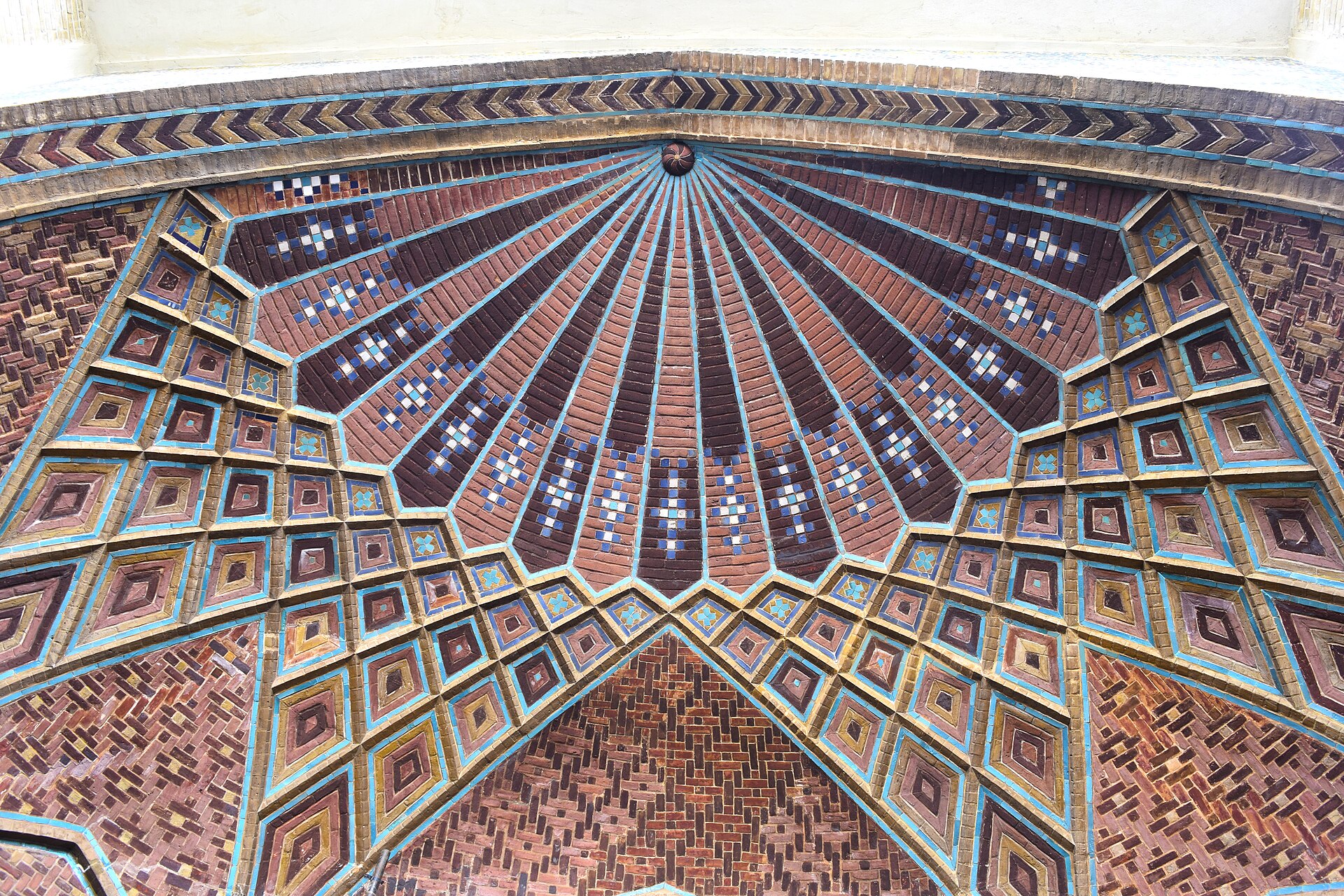
Most itineraries treat Tehran as a transit lounge: land, sleep, fly or drive onward to Isfahan. This is a mistake, and it is an expensive one, because Tehran contains the single most useful introduction to Iranian architecture and one of the best museum complexes in the region — and both are easier to absorb here, at the start of a trip, than anywhere else.
Start with Golestan Palace
The Golestan Palace has been World Heritage since 2013 (reference No. 1422), listed under criteria (ii), (iii) and (iv). The nomination runs to 5.3 hectares of built area inside a 26-hectare buffer zone, and it is, in UNESCO’s words, a masterpiece of the Qajar era embodying the integration of earlier Persian crafts and architecture with Western influences.
Three things make it the right first stop:
- It is a complex, not a building. Eight key palace structures around a garden, mostly now museums, surrounded by a wall with gates. You are walking through a working seat of power, not a single monument.
- It is where Iranian architecture met Europe. The nomination is explicit about this — cast iron used structurally, European motifs inside Persian forms — and it produced what UNESCO calls an east-west synthesis that became a source of inspiration for modern Iranian architects.
- The mirror hall. Golestan contains the interior that made the mirror-work craft famous well beyond Iran. Seeing the technique here, at the start, means you’ll recognise its descendants in the shrines and tea houses of Shiraz and Isfahan for the rest of the trip.
Go in the morning. Give it three hours and do not rush the garden.
The museums that actually earn their time
Tehran has more museums than any visitor can use, and the honest advice is to pick three.
- The National Museum of Iran — two buildings, one for pre-Islamic and one for the Islamic period. The pre-Islamic wing is the reference collection for everything you will see at Persepolis and elsewhere. Do this before you leave the capital if you are travelling south.
- The National Jewelry Museum — held in a bank vault, open for limited hours, and containing objects that have to be seen to be believed. Check the schedule before you plan your day around it; the hours are restricted and it closes on some days.
- The Glassware and Ceramics Museum — smaller, quieter, and a good antidote to museum fatigue.
- The Tehran Museum of Contemporary Art — a genuinely major collection of twentieth-century Western and Iranian art, in a building worth seeing for itself.
The bazaar, and how to use it
Tehran’s Grand Bazaar is not a shopping opportunity; it is a logistics network. It is enormous, it is organised by trade, and it has been the commercial spine of the city for centuries.
Two ways to do it:
- Go early, on a weekday, with no shopping list. Walk the coppersmiths’ section, then the carpet section, then whatever you stumble into. The bazaar is a sequence of specialised quarters, and the transitions between them are the interesting part.
- Go with a single errand. Pick one thing you actually want to buy — a small carpet, a piece of copper, some saffron — and let the process of finding it teach you how the place works.
Around the bazaar are the older commercial streets and the food stalls. Eat where there is a queue of locals and no English menu.
The mountain
This is the part of Tehran that surprises people most. The city runs directly into the Alborz mountains, and the northern districts climb the slope — which means the altitude, the air and the temperature all change as you move north.
- Darband — a valley at the top of the city with a stream, a path, restaurants and tea houses along the water. In the evening it is where Tehran goes to breathe. The walk above Darband continues into proper mountain terrain.
- Tochal — a full mountain, reachable by a long cable car, with skiing in winter. On a clear day the view over the entire city is the best in Iran.
- Tajrish Bazaar — a covered market in the north, more food-oriented and more upmarket than the Grand Bazaar, and a good place to buy dried fruit, nuts and sweets.
The practical consequence: Tehran has microclimates. It can be 35°C in the south of the city and materially cooler in the north. Dress in layers, and plan your days so that outdoor activity happens at altitude.
Getting around
- The metro is the answer to Tehran’s traffic, which is legendary and real. It is cheap, it is fast, it is clean, and the stations are signed in both Persian and Latin script. Women’s carriages are marked and available; using them is optional.
- Taxis and ride-hailing work, and are the practical option after the metro closes. Traffic peaks are brutal — do not schedule a tight connection across the city at 5pm.
- Walking works within districts, not between them. Tehran is huge, and distances on a map are misleading.
The single most useful preparation: save your destinations as screenshots in Persian. Show the driver the screen. This removes almost all of the friction from getting around.
Three days, structured
| Day | Morning | Afternoon | Evening |
|---|---|---|---|
| 1 | Golestan Palace | The Grand Bazaar, walking | A traditional restaurant; early night |
| 2 | National Museum of Iran | Museum of Contemporary Art, or the Jewelry Museum if open | Darband, for dinner by the stream |
| 3 | Sa’dabad or Niavaran palace complex (north) | Tajrish Bazaar and the northern streets | Rooftop or hillside view over the city |
If you have a fourth day, spend it on whatever you liked most. Tehran is a city that improves the second time you do something.
Practical notes
- When to go. Spring (April–May) and autumn (October–November) are ideal. Summer is hot in the south of the city and the air quality can be poor; winter is cold and often smoggy, though the mountains are at their best.
- Money. Iran has its own banking and payment situation, and cards issued abroad do not work. Bring cash in a major currency and arrange your exchange locally. This is the single most important logistical preparation for Iran and it applies to every city, not just Tehran.
- Air quality. On bad days, plan indoor activities and head north rather than south. The pattern is predictable if you check it daily.
- Traffic. Build slack into any plan that crosses the city. Twenty minutes and ninety minutes can be the same journey at different hours.
- Photography. Public buildings, metro stations and some museums are sensitive. Ask before photographing people, and when in doubt, don’t.
The verdict
Tehran is not beautiful in the way Isfahan is beautiful, and it is not trying to be. It is a large, hard-working capital that contains a World Heritage palace with a mirror hall, a museum collection that will make sense of the rest of your trip, a bazaar that explains the country’s economy, and a mountain range you can be standing on within an hour of the city centre.
Three days here will make everything you see afterwards more legible. Skipping it saves you three days and costs you the context for the other two weeks.
Frequently asked questions
Is Tehran worth more than one night?
Yes, and three days is the honest minimum. Tehran is not a sight-per-hour city; it is a city where the museums, the bazaar and the mountains to the north reward a slower approach. Travellers who give it one night almost always regret it.
Can I get around without Persian?
The metro is bilingual, station names are in Latin script, and younger Tehranis generally have some English. Outside central areas and in taxis you will need a few words or a translation app. Writing your destination in Persian for a driver is the single most useful habit to develop.
What should I see first?
Golestan Palace, on your first morning, when the light in the mirror hall is best and the crowds are thinnest. It sets the architectural vocabulary for the rest of the country.