Destinations · Oman
Land of Frankincense: The Resin That Built Oman's Ports
For two thousand years, frankincense from Dhofar was the luxury that connected southern Arabia to Rome, Persia and India. UNESCO inscribed the landscape of its production in 2000.
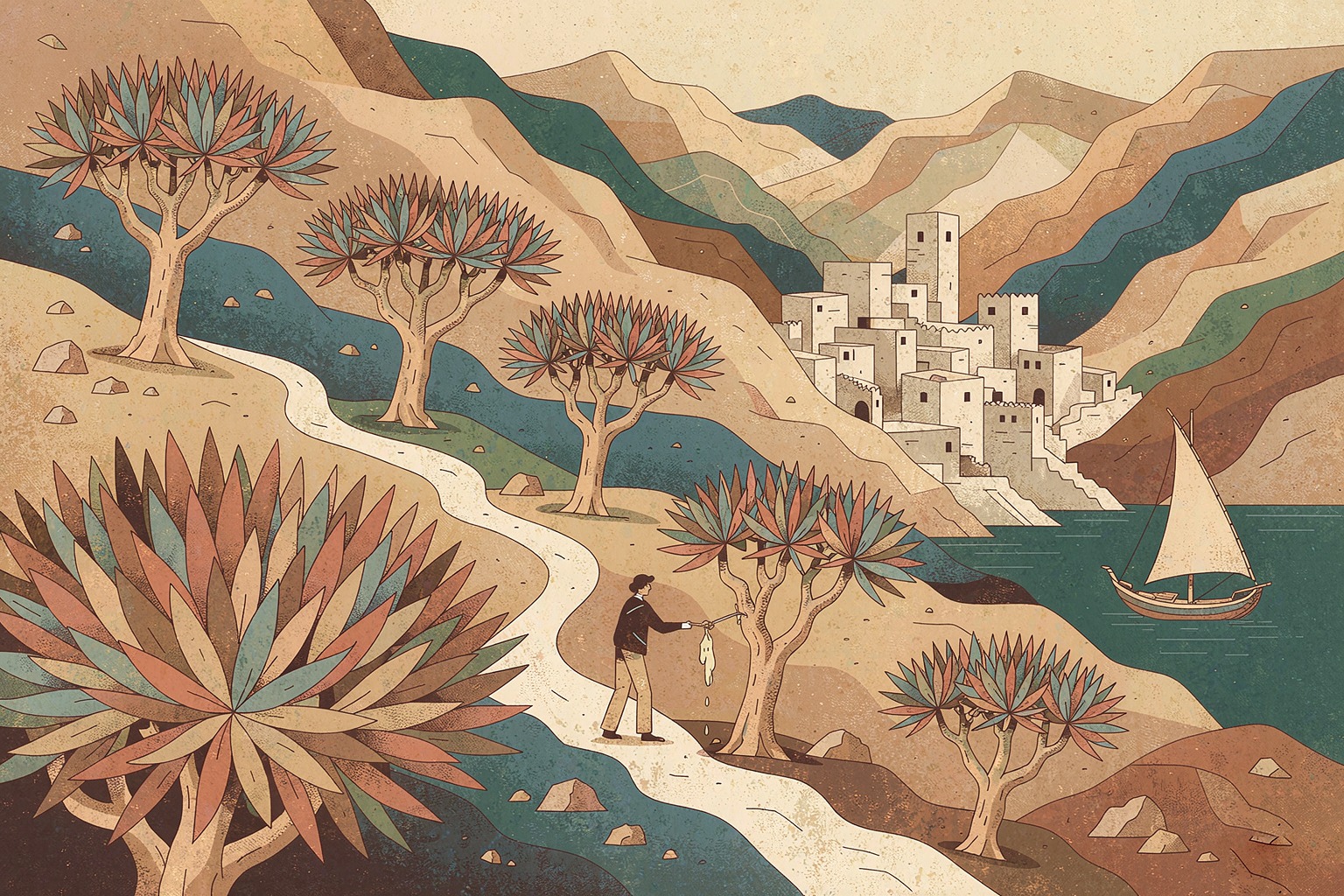
Frankincense is a tree resin, and for most of classical antiquity it was worth more than its weight in ordinary goods. It burned in Roman temples and Persian fires, scented the palaces of India, and was carried across the desert in quantities that made the towns of southern Arabia rich. The landscape that produced it is now a UNESCO World Heritage site.
Land of Frankincense (site 1010, inscribed 2000) protects the entire chain — the groves where the trees grow, the inland caravan city, the port that shipped the resin, and the cemetery of the people who made the trade work. All of it is in Dhofar, Oman’s southern province, around the monsoon city of Salalah.
Four sites, one commodity
UNESCO’s property has four components, each a link in the supply chain:
- Wadi Dawkah — the surviving groves of Boswellia sacra, the frankincense tree. The trees grow on limestone slopes with almost no soil, tapped by cutting the bark so the resin bleeds out and hardens into pale tears.
- Ubar — the “lost city of the incense route”, rediscovered in the 1990s and identified with the legendary Iram of the pillars. Its prosperity came from water and the caravan trade, both of which vanished.
- Khor Rori — the port city of Sumhuram, founded around the 4th century BC as the seaward outlet for the trade; its warehouses and walls overlook a lagoon.
- Batina — a necropolis whose graves contain frankincense and imported goods, evidence of how far the network reached.
The monsoon exception
Dhofar is unlike the rest of Arabia. From June to September the khareef monsoon rolls in from the Indian Ocean, turning the hills green, filling the wadis, and dropping the temperature to something close to temperate. It is the only place on the peninsula where frankincense grows well — a microclimate that made this coast strategically valuable for two millennia.
The trees themselves are extraordinary: they grow out of bare rock, produce a resin the ancient world fought over, and can live for centuries if the bark is tapped carefully and given time to recover between harvests.
Visiting the trail
Salalah is the base. The airport has international connections, and a car is the easiest way to reach Khor Rori (40 km east) and the Wadi Dawkah groves (further inland). Khor Rori has a site museum that explains the trade; the groves are best seen with a local guide who can point out the tapped trunks.
In Salalah’s souqs, frankincense is still sold by grade — pale, amber, dark — burned in a small clay mabkhara at weddings, in homes and in mosques. The ritual is almost unchanged. The resin that once reached Rome is still on sale in the town that sent it.
Frequently asked questions
Where can I see the Frankincense Trail sites?
The UNESCO property has four parts near Salalah: the port of Khor Rori, the inland city of Ubar (Wadi Dawkah), the necropolis of Batina, and the frankincense trees of Wadi Dawkah itself. Khor Rori is the easiest visit and the most legible, with a good site museum nearby.
Can I buy frankincense there?
Yes — Salalah's souqs sell the resin (called luban in Arabic) in various grades, along with the burners (mabkhara). It is a legitimate souvenir; check airline rules before carrying resin in hold luggage.
When is the best time to visit Dhofar?
The khareef monsoon (roughly June to September) turns the hills green and cool — spectacular but crowded and humid, with many outdoor sites muddy. October to March is the comfortable season for the archaeological sites.