Destinations · Morocco
Fez: The World's Oldest University Is Not Where You Think
Al-Qarawiyyin was founded in 859 by a woman, Fatima al-Fihri — and it sits inside a working medina that UNESCO calls one of the best-preserved in the Arab world.
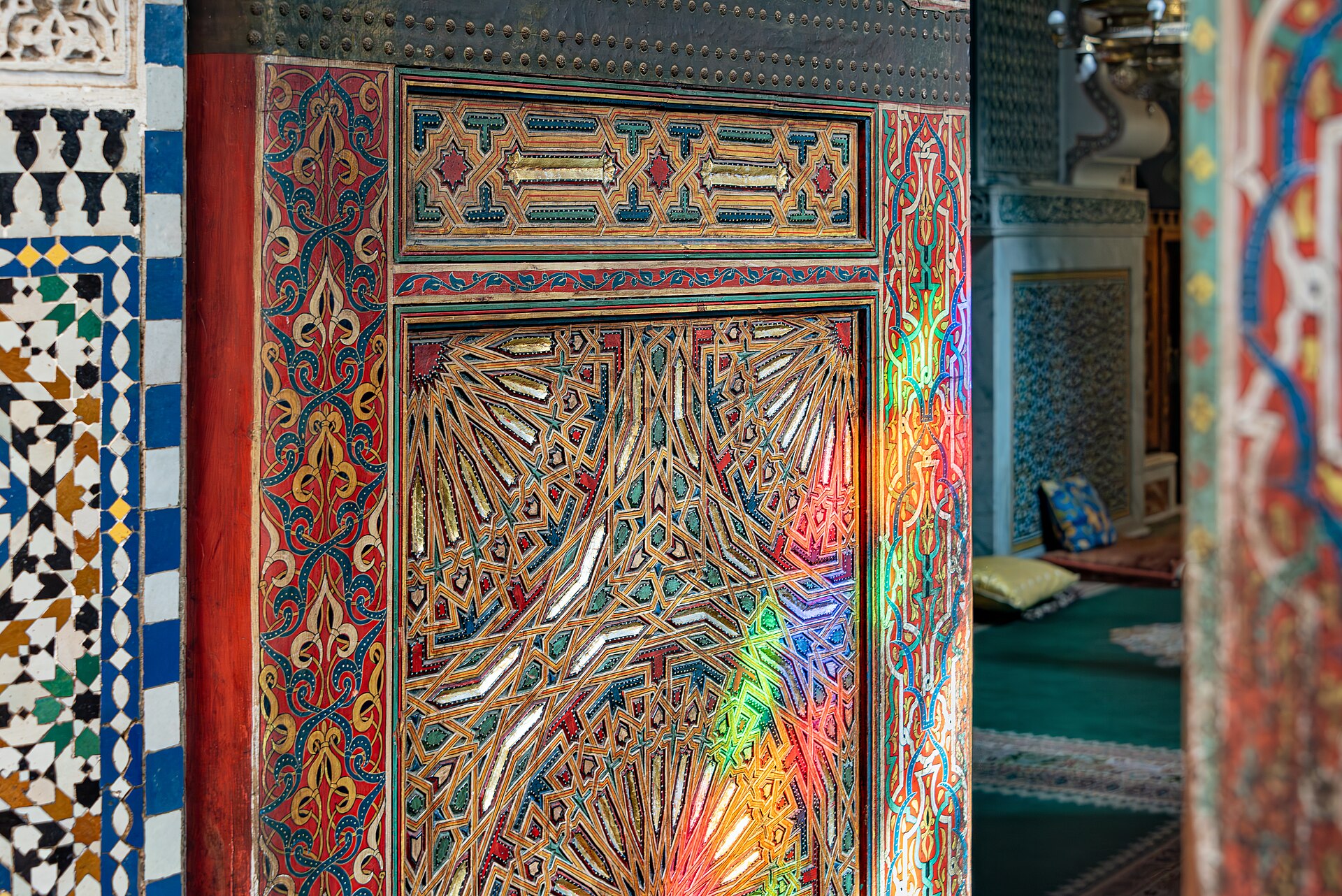
Ask a European where the world’s oldest university is and you will get Bologna. Ask anyone in Fez and you will get a blank look, because the answer is not in dispute here: it is the Qarawiyyin, inside the medina, and it has been teaching since the ninth century.
What makes the story better is who paid for it. In 859, a woman named Fatima al-Fihri — the daughter of a merchant who had come to Fez from Kairouan, in what is now Tunisia — used her inheritance to build a mosque. Her sister Mariam built another across the river. Fatima’s became the Qarawiyyin, which grew a teaching circle, then a curriculum, then a library, and then a reputation that drew scholars from across the Islamic world for the next thousand years. The chronicles say she fasted every day of the construction.
Her foundation is why UNESCO’s description of Fez carries the line — repeated in the Arabic and Chinese versions of the text but oddly absent from the English one — about the city containing “the oldest university in the world.”
What UNESCO actually inscribed
The Medina of Fez entered the World Heritage List in 1981, and the citation is unusually generous about why: it is “one of the most extensive and best conserved historic towns of the Arab-Muslim world.” The city was founded by the Idrisid dynasty between 789 and 808; the two original quarters sat on opposite banks of the Fez wadi, were joined behind a single wall by the Almoravids in the eleventh century, and reached their height under the Marinids in the thirteenth and fourteenth, when Fez replaced Marrakesh as capital and filled with madrasas, fondouks, palaces, mosques and fountains that survive today.
UNESCO lists two criteria. The second notes the city’s influence on architecture and town planning across North Africa, Andalusia and sub-Saharan Africa. The fifth notes something subtler and more interesting for a visitor: the medina is not a museum piece but a living settlement whose functions are largely intact — “it not only represents an outstanding architectural and urban heritage, but also transmits a life style, skills and a culture.”
The three Fezes
Visitors conflate them, and shouldn’t:
- Fez el-Bali — the old medina. The walled labyrinth, the tanneries, the Qarawiyyin, most of what you came for. It is one of the largest car-free urban areas on earth.
- Fez Jedid — the “new town” founded in 1276 by the Marinids, west of the old one. Royal palace, mellah (Jewish quarter), army quarters. Not new at all, of course.
- Ville Nouvelle — the French-built city, wide boulevards, cafés, the train station. Useful, pleasant, and not the reason you came.
Practical notes for the medina
- Hire a guide for the first half-day, then walk alone. The medina reportedly has thousands of alleys; the guide’s job is to break the ice, not to be your chaperone for three days.
- The tanneries are best from the terrace shops above them, and a sprig of mint across the nose is not a joke — the smell is powerful. Tip the terrace, buy nothing, walk away politely.
- Al-Qarawiyyin cannot be entered by non-Muslims, but the medina’s other madrasas — Bou Inania, al-Attarine — can, and their carved cedar and stucco is the closest thing to the city’s fourteenth-century peak you can stand inside.
- The Qarawiyyin library, restored and reopened in 2016, is a separate, visitable building and holds manuscripts including what is often described as the oldest surviving Qur’an in the Maghrebi hand. Book ahead.
- Fridays close much of the medina in the afternoon. Plan the craft-shopping for another day.
Fez rewards the person who gets lost on purpose. The city’s own World Heritage citation makes the case better than any guidebook: it has kept not just its buildings but its skills — the plasterers, zellige cutters, weavers and leather workers whose trades are named in the UNESCO text as a “major advantage” for the site’s survival. Walk slowly and you’re watching a heritage that’s still earning its living.
Frequently asked questions
Is Al-Qarawiyyin really the oldest university in the world?
It is the oldest continuously operating higher-education institution in the world by most reckonings: founded as a mosque-school in 859, it gained a formal teaching structure in the 10th century and remained a centre of Islamic learning for over a millennium. Bologna (1088) is usually called the oldest university in the European sense. UNESCO's own Fez listing refers to the city as having 'the oldest university in the world'.
Who founded it?
Fatima al-Fihri, the daughter of a wealthy merchant who migrated to Fez from Kairouan in present-day Tunisia. She and her sister Mariam funded two mosques from their inheritance — Mariam the Andalusiyyin mosque, Fatima the Qarawiyyin. Fatima is said to have fasted for the entire period of construction.
Can non-Muslims enter Al-Qarawiyyin?
Not the prayer hall. The mosque remains an active place of worship and is closed to non-Muslims, as is standard in Morocco. You can see the minaret and courtyards from outside, and the medina around it is entirely open.