Destinations · Uzbekistan
Bukhara: A Walk Through the Silk Road's Living Museum
The historic centre of Bukhara has been World Heritage since 1993, and it is the most complete surviving medieval city on the Silk Road. A walking guide to the minaret Genghis Khan spared, the oldest surviving mausoleum in Central Asia, and how to spend four days here properly.
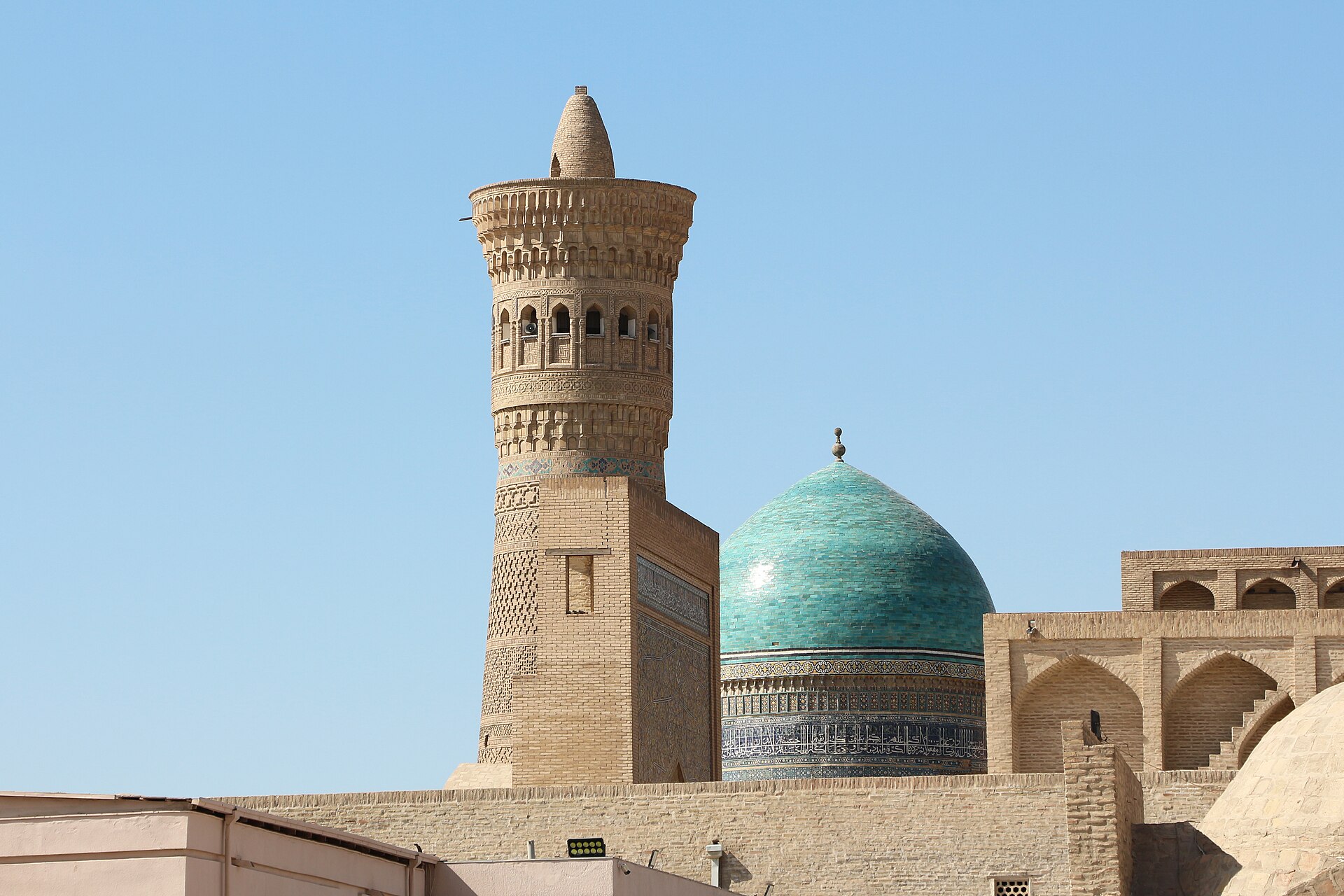
Of all the Silk Road cities, Bukhara is the one that survived most completely. Its historic centre was inscribed in 1993 under reference No. 602, and unlike a single monument, the listing covers a whole inhabited medieval fabric — mosques, madrasas, caravanserais, bathhouses, bazaars and houses, still standing in their original street pattern.
That is the reason to come. Samarkand has bigger buildings. Bukhara has a city.
The one building to understand first
Start at the Ismail Samani Mausoleum and spend a long time with it. Built at the turn of the tenth century as the tomb of the Samanid dynasty, it is one of the oldest surviving monuments of Islamic architecture in Central Asia — and it is made entirely of fired brick, with the ornament created by the brickwork itself: basket-weave, herringbone, and patterns that change as the light moves across the walls.
There is almost no tile. Everything you see is achieved through how the bricks are laid. It is the clearest single lesson in Central Asian architecture, and it will change how you look at every later building on the trip.
It is also off the main tourist axis, in a park to the west of the old centre, which means you can often have it nearly to yourself.
The Kalyan complex, and the minaret Genghis Khan left standing
The centre of gravity of Bukhara is the Poi Kalyan complex: a mosque, a madrasa facing it across a square, and between them the Kalyan Minaret.
The minaret dates from the twelfth century and is the object most responsible for Bukhara’s reputation. Local tradition — repeated by every guide and every guidebook, and worth treating as tradition rather than as documented fact — holds that when Genghis Khan took the city in 1220, he ordered everything destroyed except this tower, because he was impressed by it. Whatever the exact truth, the minaret has stood through the Mongol conquest and everything since.
Stand at its base and look up. The banded brickwork, the narrowing shaft, the gallery — it is the ancestor of a great many towers across the region.
The rest, in walking order
The old centre is compact. A good day covers:
- The Ark Fortress — the walled residence of the rulers of Bukhara, occupied for centuries and now partly a museum. The walls and the view from the entrance are the point; the interior is thinner than the exterior promises.
- Chor Minor — a small, strange, four-towered gatehouse that looks like nothing else in the city. It is a nineteenth-century building and its nickname (chor minor, four minarets) is a joke: the towers were never minarets, and no prayer was ever called from them.
- Lyab-i Hauz — a seventeenth-century plaza around a stone-lined pool, ringed by a madrasa and a khanaka, with tea houses under mulberry trees. Sit here for two hours in the late afternoon. It is the social centre of the historic core and one of the great squares of the region.
- The trading domes (toqi) — covered bazaars at the intersections of the old streets, each historically specialised: one for jewellers, one for money-changers, one for hats. The dome-and-crossroads pattern is functional engineering, and walking through the sequence is the fastest way to understand how Silk Road commerce was actually organised.
- The bazaars and workshops — gold-thread embroidery (zardozi), carpet repair, metalwork, miniature painting. Bukhara’s craft economy is real, and much of it is still family-run.
Four days, structured
- Day 1 — Ismail Samani Mausoleum, the Chashma Ayub shrine, and a first walk into the centre. Do not start with the Kalyan minaret; work up to it.
- Day 2 — Poi Kalyan, the Ark, the trading domes. End at Lyab-i Hauz with tea.
- Day 3 — Chor Minor, the outlying madrasas, and the workshops. Buy something from a maker.
- Day 4 — Return to whatever you liked most, at a different time of day. Or take the short trip to the summer palace of the last emir, outside the city.
Days three and four are what separate a good Bukhara trip from a rushed one. The city rewards repetition more than it rewards coverage.
Practical notes
- Where to sleep. Staying inside the historic core is worth a premium here. The whole point of the listing is that people live in it, and you can be part of that for the price of a room.
- When to go. Spring and autumn are ideal. July and August are genuinely punishing — the city is in a desert basin, and the shade of the madrasa courtyards is the reason they are built the way they are.
- Money and bargaining. Uzbek som for daily things. Bargaining is expected in the bazaars and the craft shops; ask the price of something small first to calibrate.
- Dress and photography. Bukhara is comparatively relaxed, but it remains conservative. Ask before photographing people, and note that photography inside many religious buildings is restricted or prohibited.
- Getting there. Bukhara has an airport and a rail connection. The high-speed train from Tashkent makes the city an easy pair with the capital, and there is a further link onward to Samarkand.
The wider Uzbek list
Bukhara is one of eight World Heritage properties in Uzbekistan, and the country’s pattern is unusual: it has both very old listings and very new ones.
| Property | Inscribed |
|---|---|
| Itchan Kala (Khiva) | 1990 |
| Historic Centre of Bukhara | 1993 |
| Historic Centre of Shakhrisyabz | 2000 |
| Samarkand — Crossroad of Cultures | 2001 |
| Western Tien-Shan (natural) | 2016 |
| Cold Winter Deserts of Turan (natural) | 2023 |
| Silk Roads: Zarafshan-Karakum Corridor | 2023 |
| Tashkent Modernist Architecture | 2026 |
Note the last one. A country whose heritage listings began with a tenth-century mausoleum has just inscribed its twentieth-century modernist architecture. Both are on the same list, and both are part of the same argument about what counts as a culture’s inheritance.
Also note that Shakhrisyabz has been on the List of World Heritage in Danger — a reminder that inscription is not the same as protection.
The verdict
Bukhara is the best city in Central Asia for spending time rather than seeing things. Four days, one hotel inside the old walls, and a willingness to walk the same streets repeatedly will teach you more about the Silk Road than any itinerary built around monuments.
Come for the minaret. Stay for the courtyards.
Frequently asked questions
How long does Bukhara need?
Three full days minimum; four is better. The historic centre is compact enough to walk, but the pleasure of Bukhara is in returning to places at different hours rather than collecting them.
Is Bukhara or Samarkand better?
They are different projects. Samarkand is monumental and vast, and you visit it. Bukhara is dense and habitable, and you stay in it. Most travellers prefer one or the other; four days in Bukhara and three in Samarkand is a fair compromise.
Do I need a guide?
For the architecture, no — the sites are well signed, and a good guidebook covers the history. For the craft economy, yes, and usefully so: a guide who knows the workshops will get you into gold-thread embroidery and metalwork studios that solo visitors don't find.